Sustainability
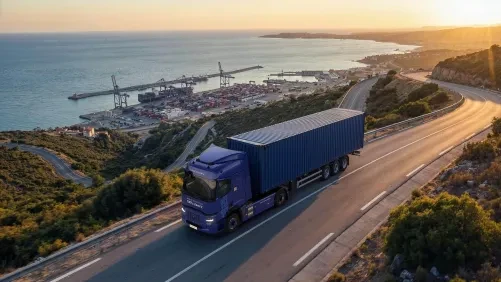
Climate change, population growth and global urbanization are transforming not only our environment, but also the demands made on transportation and infrastructure.
To remain relevant and help make the world a more thriving place, we have made certain commitments and will continue to offer our customers more sustainable and cost-effective solutions. As a signatory of the United Nations Global Compact, Renault Trucks pledges to reduce its impact on the climate and to use its resources and conduct its business in the most responsible way.
Our commitments
Research and development, purchasing, production, sales, after-sales service: Renault Trucks takes its economic, environmental, and social responsibilities very seriously, whether in its role as an employer, manufacturer, or key player in road transport. Renault Trucks pursues its activity with integrity, respecting international regulations and in accordance with the Code of Conduct and the Anticorruption Charter of the Volvo Group. Renault Trucks’ contribution to sustainable development is consolidated at the group level in an annual report, the Volvo Group Annual and Sustainability Report.
Climate
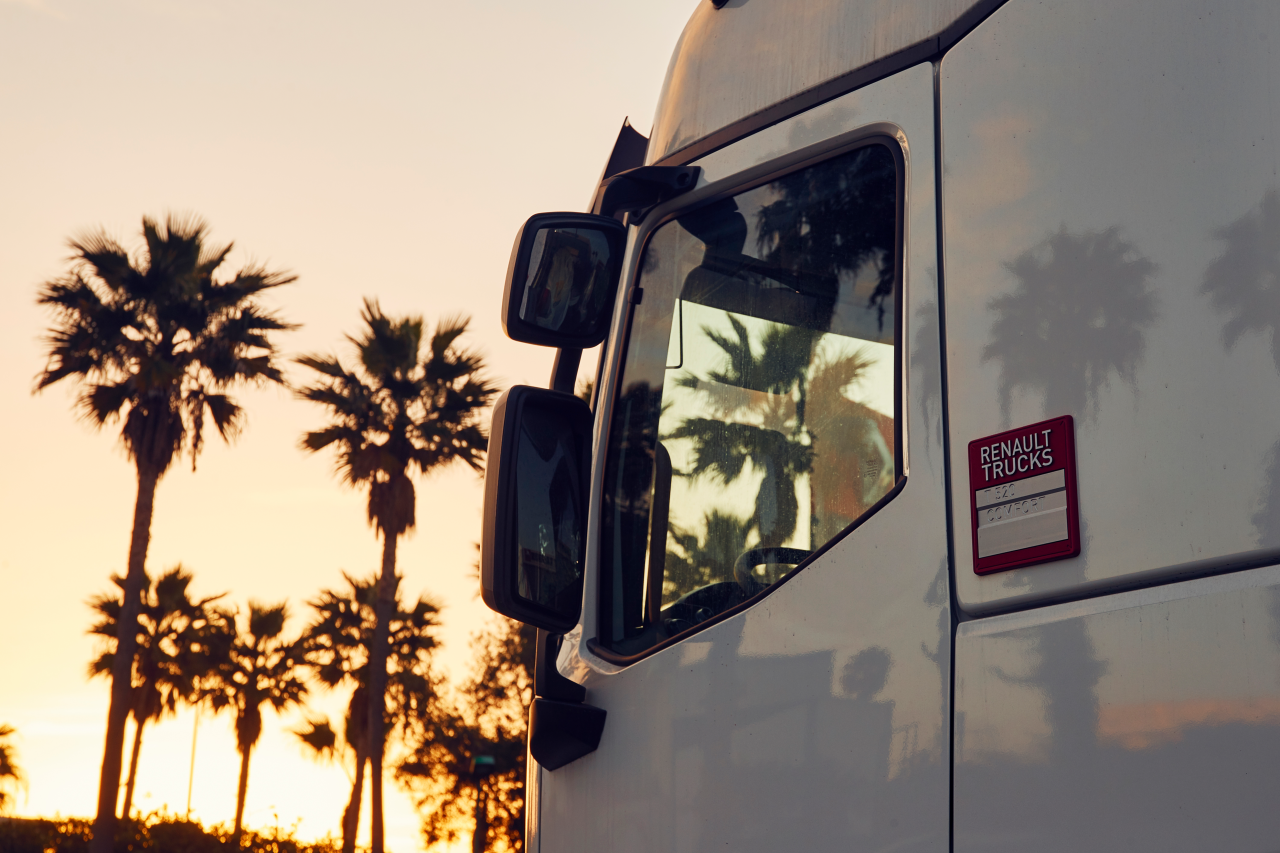
Reducing our greenhouse gas emissions
To combat climate change, Renault Trucks is endeavouring to reduce greenhouse gas emissions by developing carbon-neutral transport solutions and by minimizing the environmental impact of its activities.
Renault Trucks is committed to contributing to the goal of the Paris Climate Agreement by reducing its greenhouse gas emissions. The company has set reduction targets, established as part of the Science Based Targets Initiative (SBTi), based on scientific data. They cover three areas of action: emissions directly related to its own activity (Scope 1); indirect emissions from energy purchased and consumed (Scope 2); and all other indirect greenhouse gas emissions in the value chain, most of which come from the use of products sold (Scope 3).
Bringing 100% fossil-free light commercial vehicles and trucks onto the road
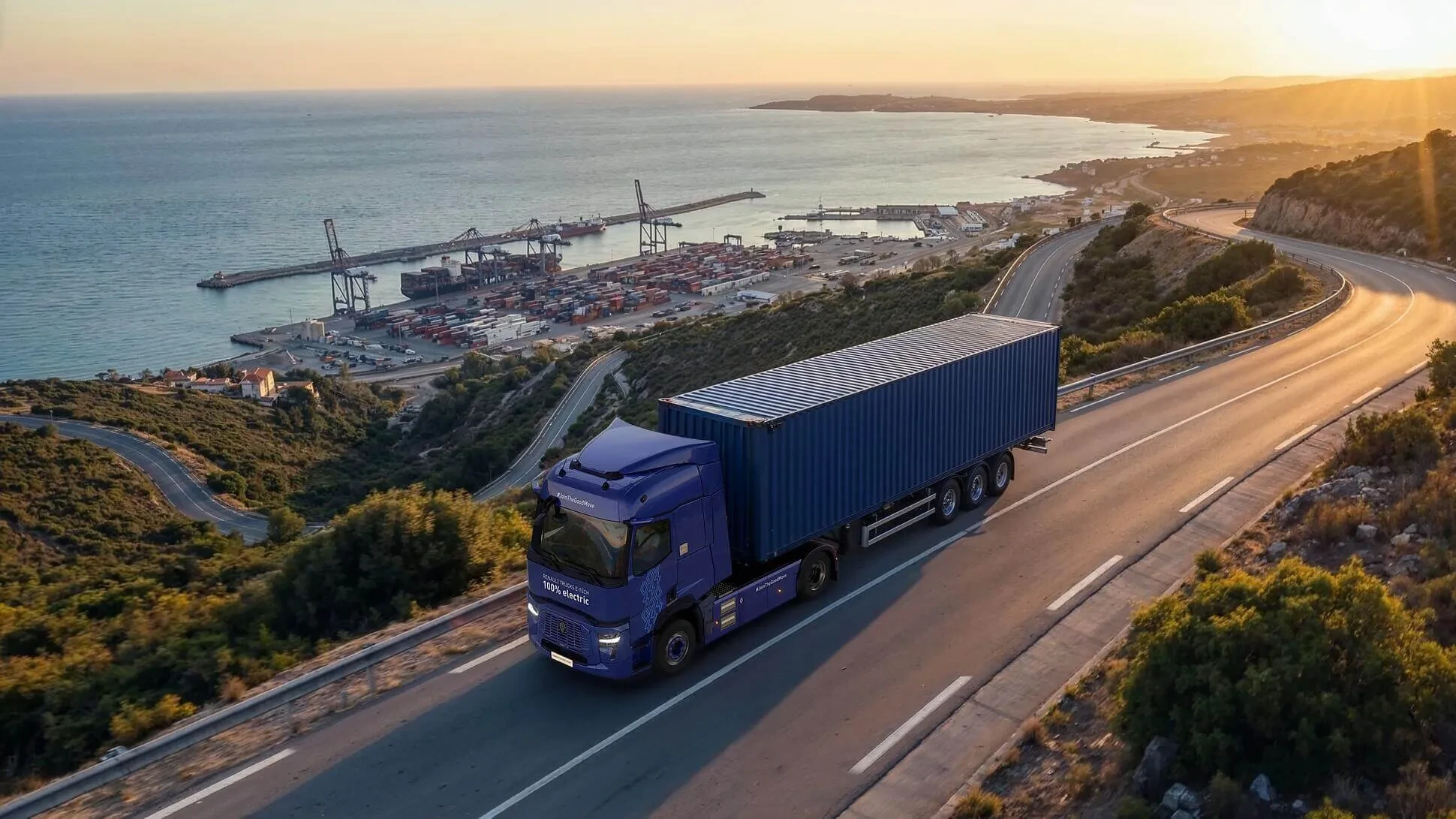
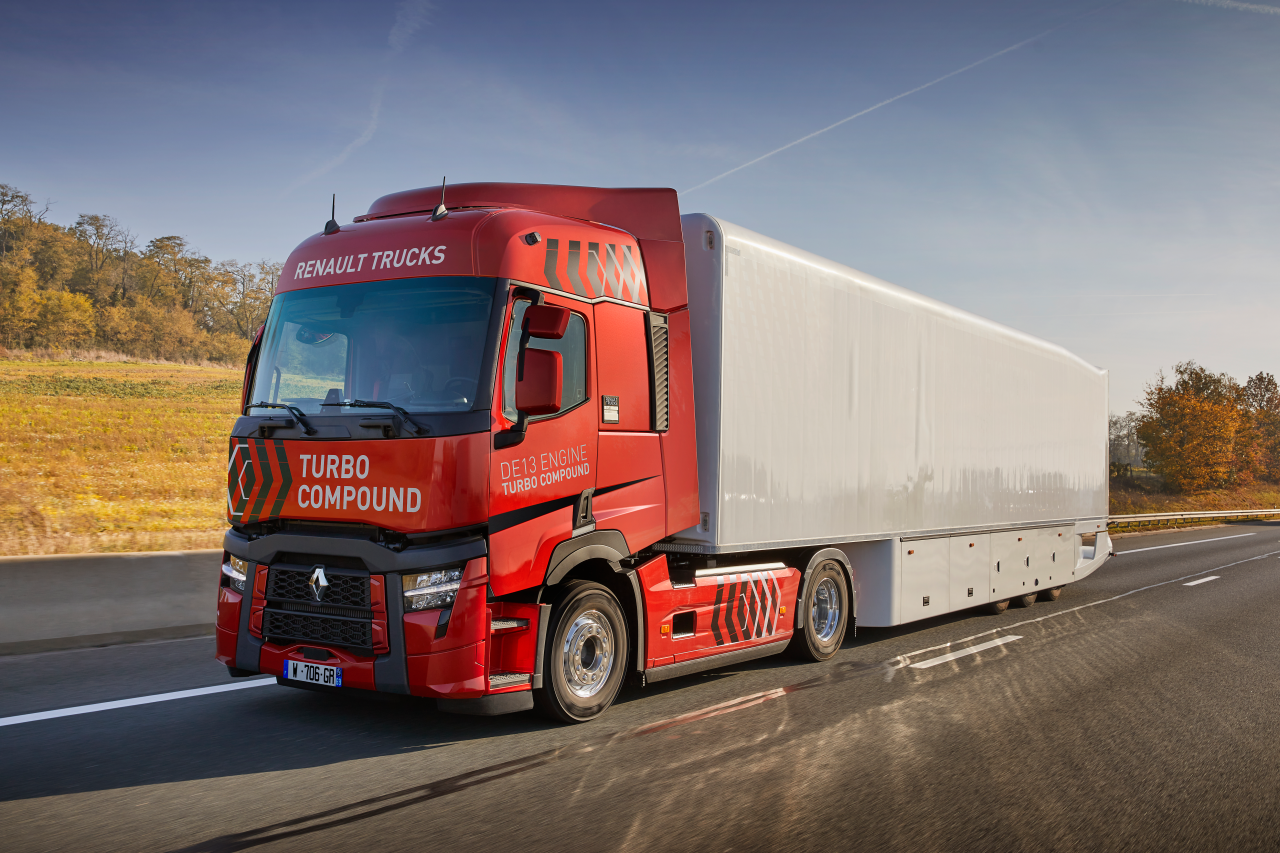
Renault Trucks is moving towards decarbonizing transport and has set itself the target of a 100% fossil-free fleet by 2040. This will be achieved through electric trucks, which should account for 50% of its sales by 2030, as well as through the development of solutions based on other alternative energies and, in the short term, the introduction of optimized diesel technologies with efficient fuel consumption.
Manufacturing in ISO 14001-certified factories
Our environmental policy is based on a rigorous management system that brings together our distribution network, our suppliers, and our partners. We manufacture our trucks in ISO 14001-certified factories. Production is organized to focus on reducing energy, water, and raw material consumption and on limiting and reusing waste.
Renault Trucks' manufacturing sites are energy- and resource-efficient. They combat waste and treat their liquid and gaseous discharges. The production facilities and industrial processes have been designed to minimize waste when manufacturing vehicles. The environmental impact is systematically taken into account in every project undertaken to enhance production or renovate installations. All Renault Trucks sites are supplied with electricity from 100% renewable sources.
Resources
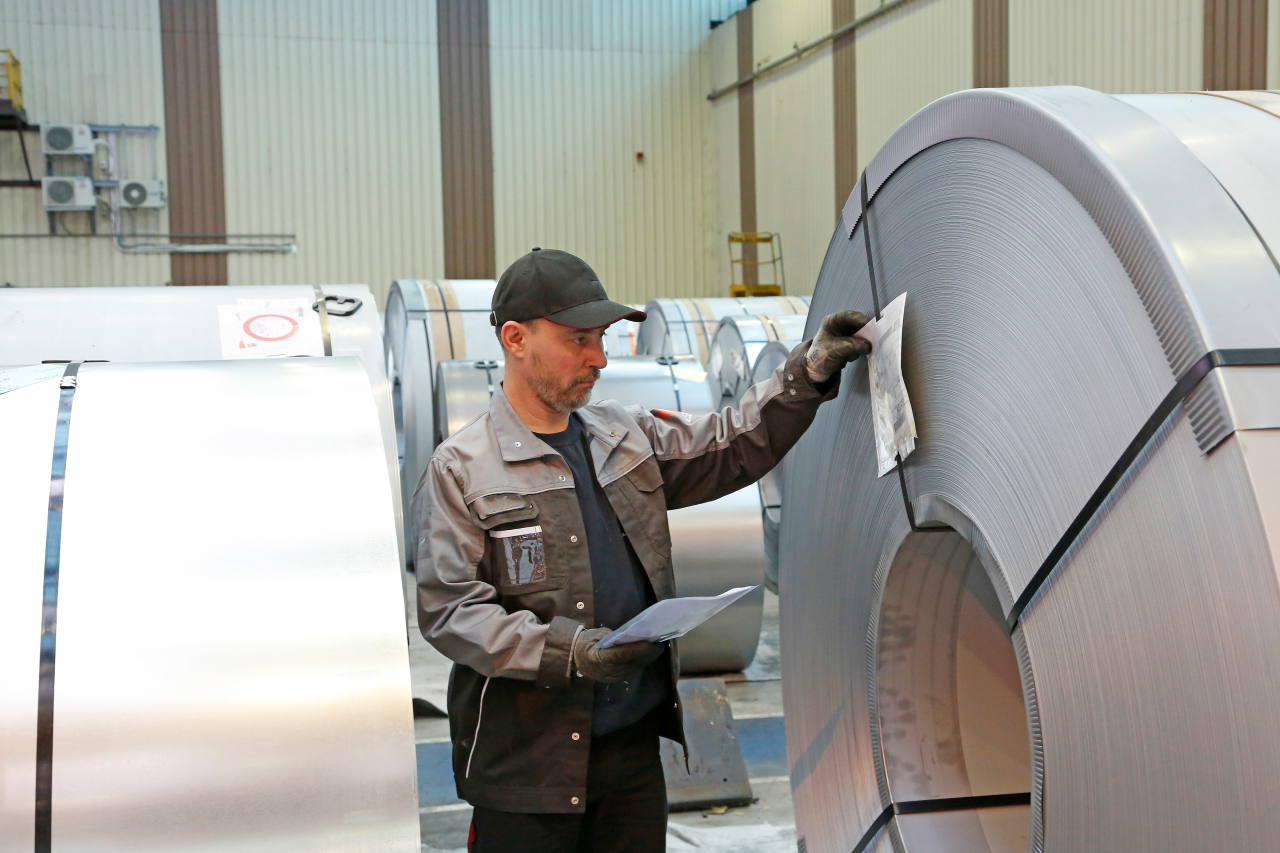
Preserving resources and reducing our consumption of raw materials
Renault Trucks is committed to preserving resources and is working to reduce its consumption of raw materials, on the one hand by improving its own productivity and that of its customers, and, on the other, by applying the principles of the circular economy to its business
For example, we have set ourselves the goal of helping our customers double the productivity of their logistics operations in the short term by offering vehicles with longer lifespans and services such as predictive maintenance, designed to ensure their maximum operational availability.
Adopting a circular economy approach
To limit the use of raw materials and the environmental impact of the vehicles it manufactures, Renault Trucks has adopted a circular economy approach that takes into account the second and third lives of vehicles, as well as their reuse in various forms and recycling.
- Regenerate: Renault Trucks renovates and reconditions its used vehicles, updates their software, and equips them with the latest technological developments available on new trucks.
- Repurpose: Through its Used Trucks Factory, Renault Trucks gives a second life to its used vehicles by transforming them to meet market demand, providing tailor-made used vehicles adapted to the needs of operators: tractor-to-rig conversion; conversion to biodiesel.
- Recycle: Renault Trucks offers a range of refurbished mechanical parts and components for standard exchange. This makes it possible to reduce the environmental impact during production by 60% compared to that of new parts.
Persons
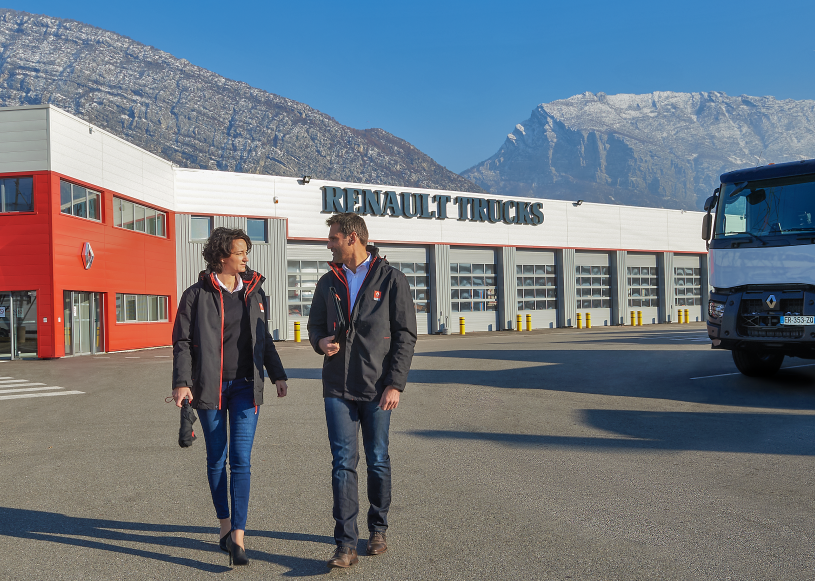
Our trucks are produced by people for people.
Ensuring the health and safety of our employees and the users of our products
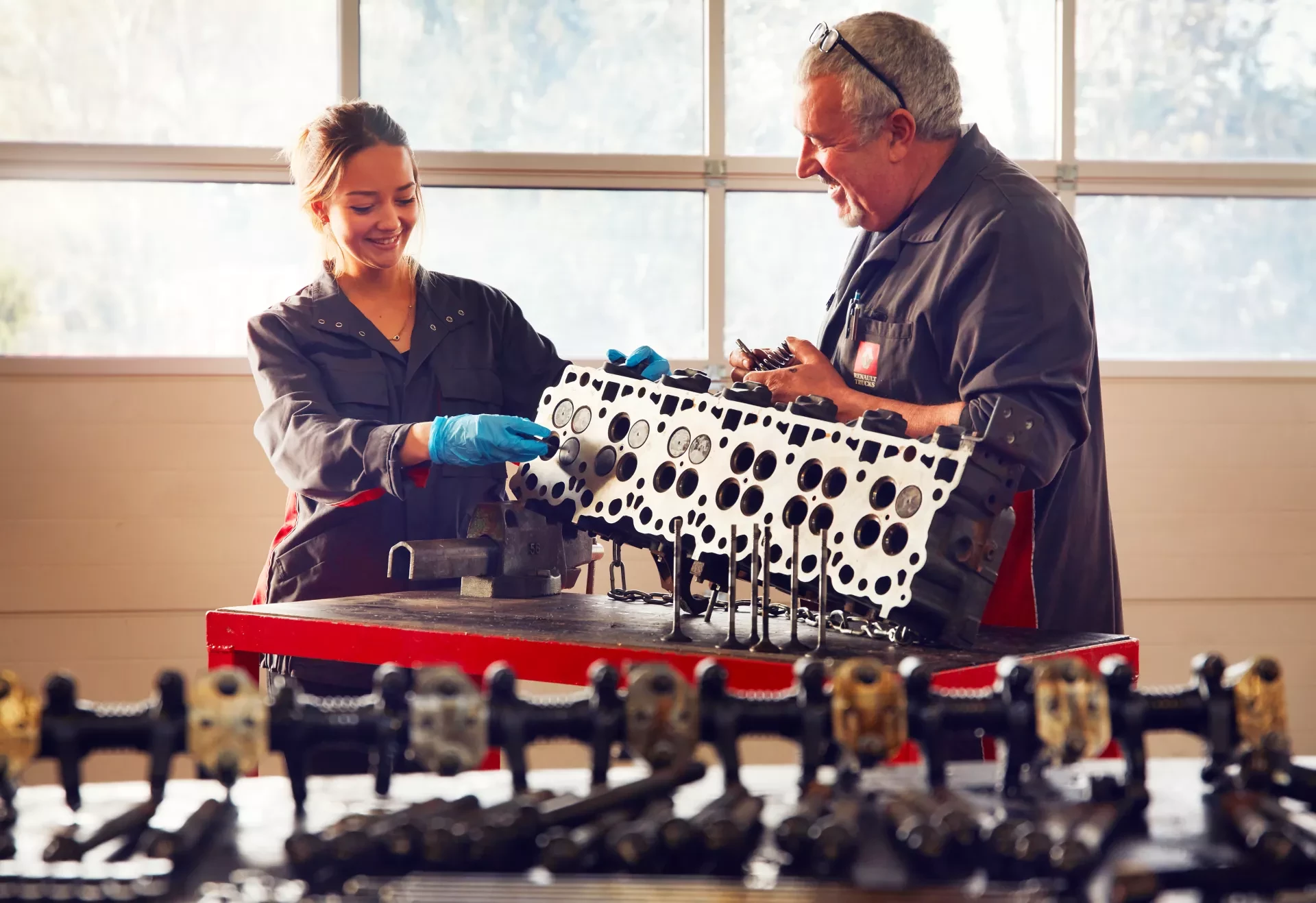
Renault Trucks cares about the health and safety of its employees and the users of its products, champions training, diversity, and inclusion, and promotes ethical behaviour.
Safety and health are priorities in all our activities. We make every effort to ensure that our products do not cause accidents, and we strive to create conditions that allow our employees to leave the workplace in a healthy physical and mental state every day.
Investing in training and skills development
Our industry is facing significant technological changes and new business models. This prompts us to continue our efforts to support the development of our colleagues and to focus on reskilling activities to meet these new demands.
Promoting diversity and inclusion
Diversity is a driver of success, as it enables everyone to contribute fully and have their skills recognized. In the automotive industry, women remain underrepresented. Within the Volvo Group, we are committed to achieving 35% representation of women across our workforce and in leadership positions by 2030, to promote fair representation and an inclusive working environment.
implementing the ten universal principles relating to human rights and labour rights, environmental protection and the fight against corruption
How we act in our daily work determines how the world perceives us. We are constantly seeking to build and be part of ecologically and socially sustainable value chains. Renault Trucks has been a signatory of the UN Global Compact since 2004 and, as such, is committed to respecting and implementing the ten universal principles relating to the respect of human rights and labour rights, environmental protection, and the fight against corruption in all its activities.
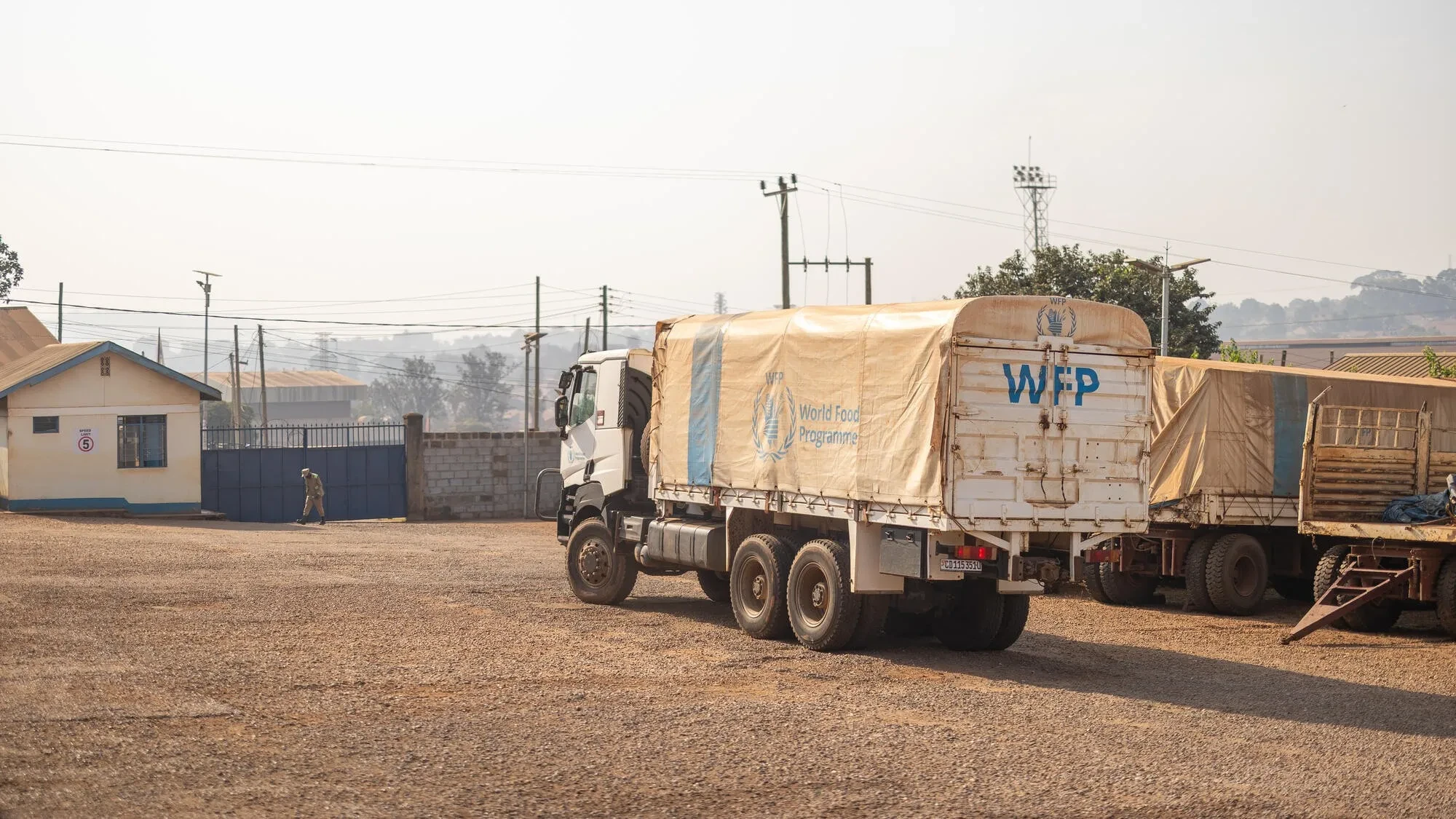
In addition, we demonstrate a strong commitment to social responsibility. Renault Trucks works every day to create the conditions that foster recruitment, development, and fulfillment for all its employees. As a major economic and social player, Renault Trucks is strongly committed to the development of the regions where it operates and supports various initiatives, particularly in the field of socio-economic integration. At the international level, Renault Trucks has joined the UN in its fight against world hunger through the World Food Programme. By involving its volunteer employees in technical training missions in sub-Saharan Africa, Renault Trucks is putting its manufacturing skills at the service of a vital transport mission.
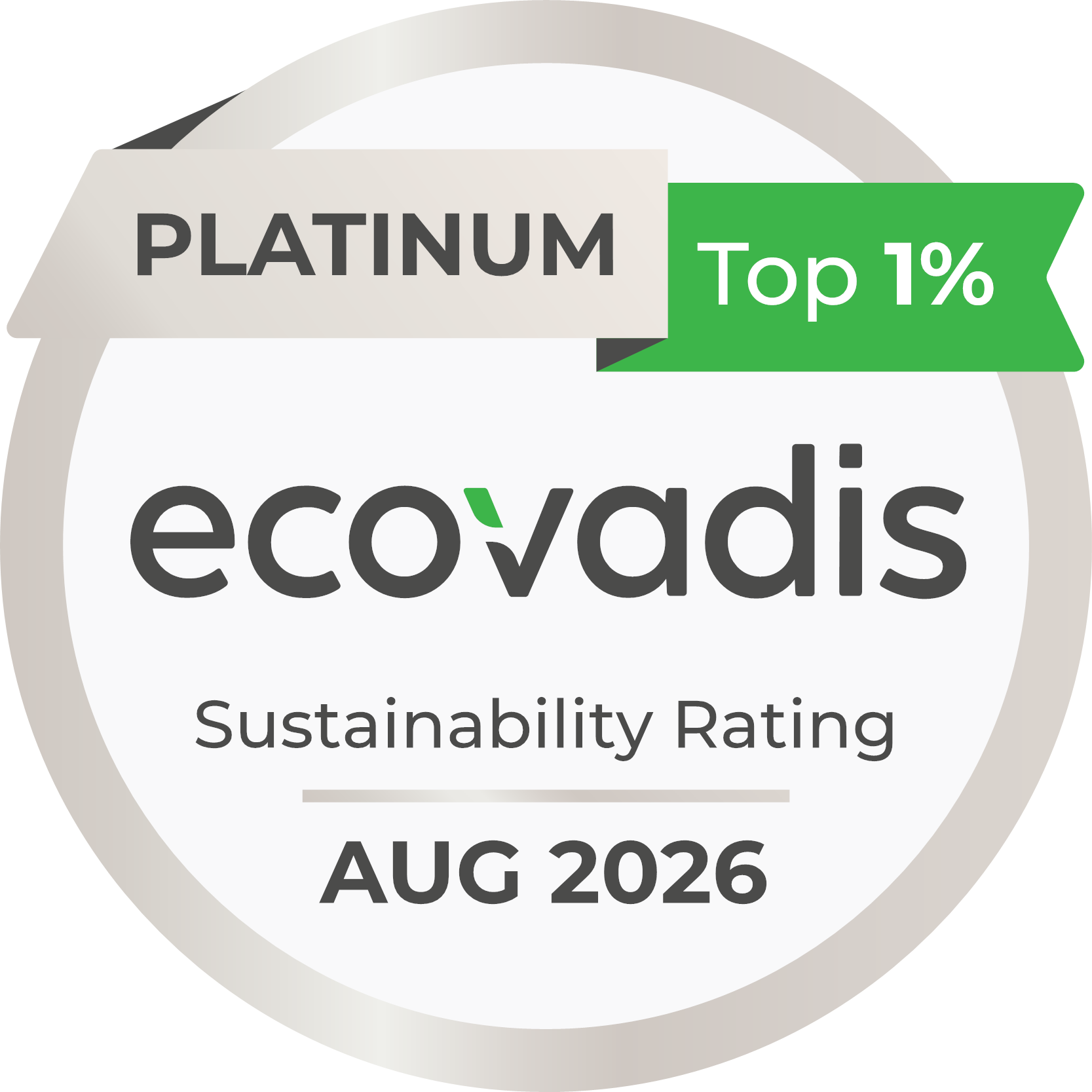
Renault Trucks has reached a new milestone in its EcoVadis assessment, achieving an overall score of 88/100 and securing a Platinum medal. It has improved its rating by five points in just one year and by 25 points since 2019, reflecting the steady strengthening of its sustainability policies and actions year after year.
Renault Trucks has built a sustainable development model that takes into account economic, social and environaental issues in a balanced way.. In all its activities, Renault Trucks is committed to reducing its impact on the climate, using resources and conducting its business in the most responsible way.
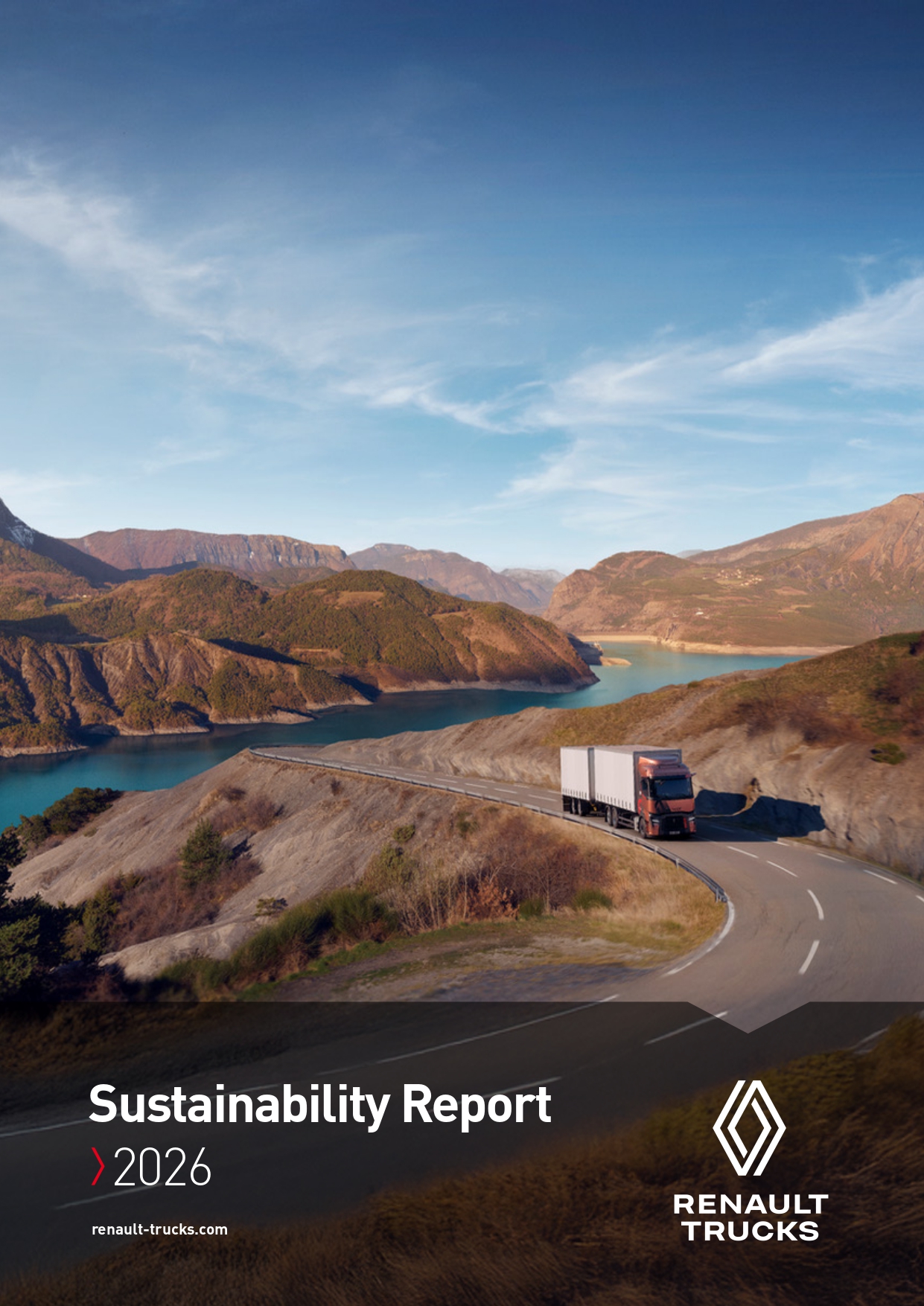
Renault Trucks 2026 Sustainability Report illustrates a vision of the future shared by all the company's employees, as well as concrete initiatives to transform the road transport industry.
Download the free Renault Trucks' Sustainability Report 2026
 Renault Trucks carries out life cycle assessments (LCAs) of its vehicles to provide information on their environmental performance. These assessments cover every stage of a truck’s life cycle, from the production of raw materials through to final disposal and recycling.
They provide data on the environmental impact of each stage and also make it possible to assess the vehicle’s contribution to global warming.
This information is available on request from the Renault Trucks Environment Department.
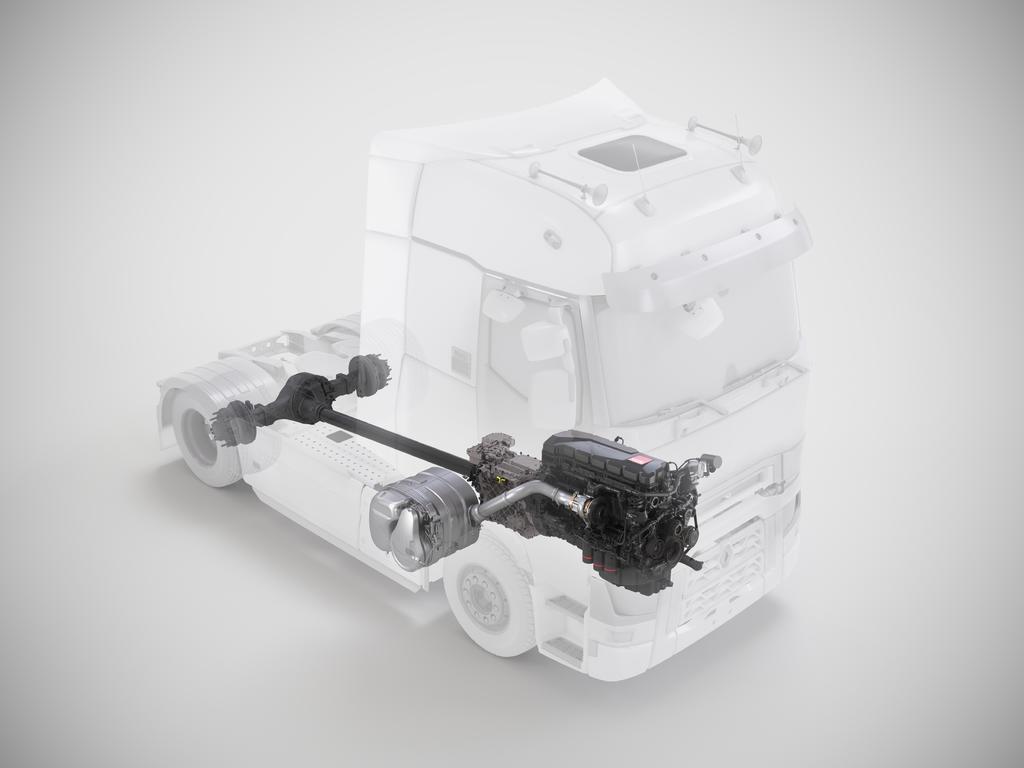 Renault Trucks complies with and supports the European REACH Regulation, which aims to reduce the risks associated with the presence of substances of very high concern (SVHCs).
 Under a regulation adopted by the European Union in 2019, CO₂ emissions from new heavy-duty trucks must be reduced by 30% by 2030, with an intermediate target of 15% by 2025.