In response to megafires, Renault Trucks envisions the emergency vehicles of tomorrow
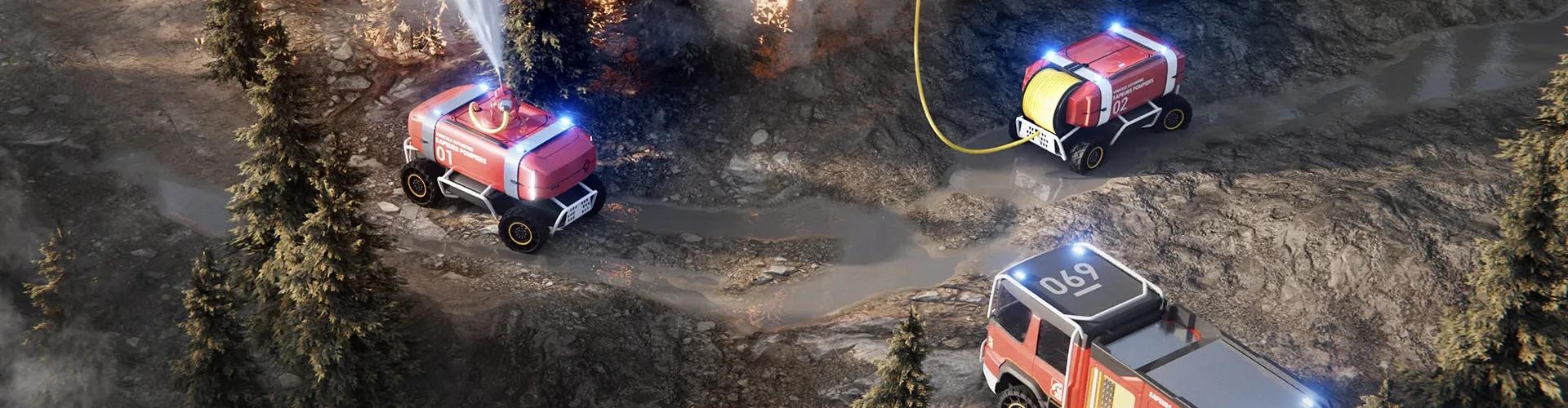
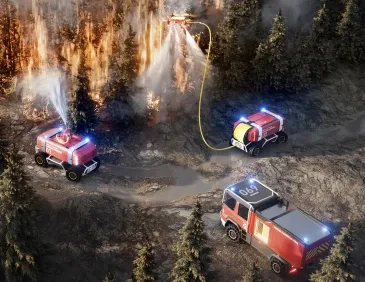
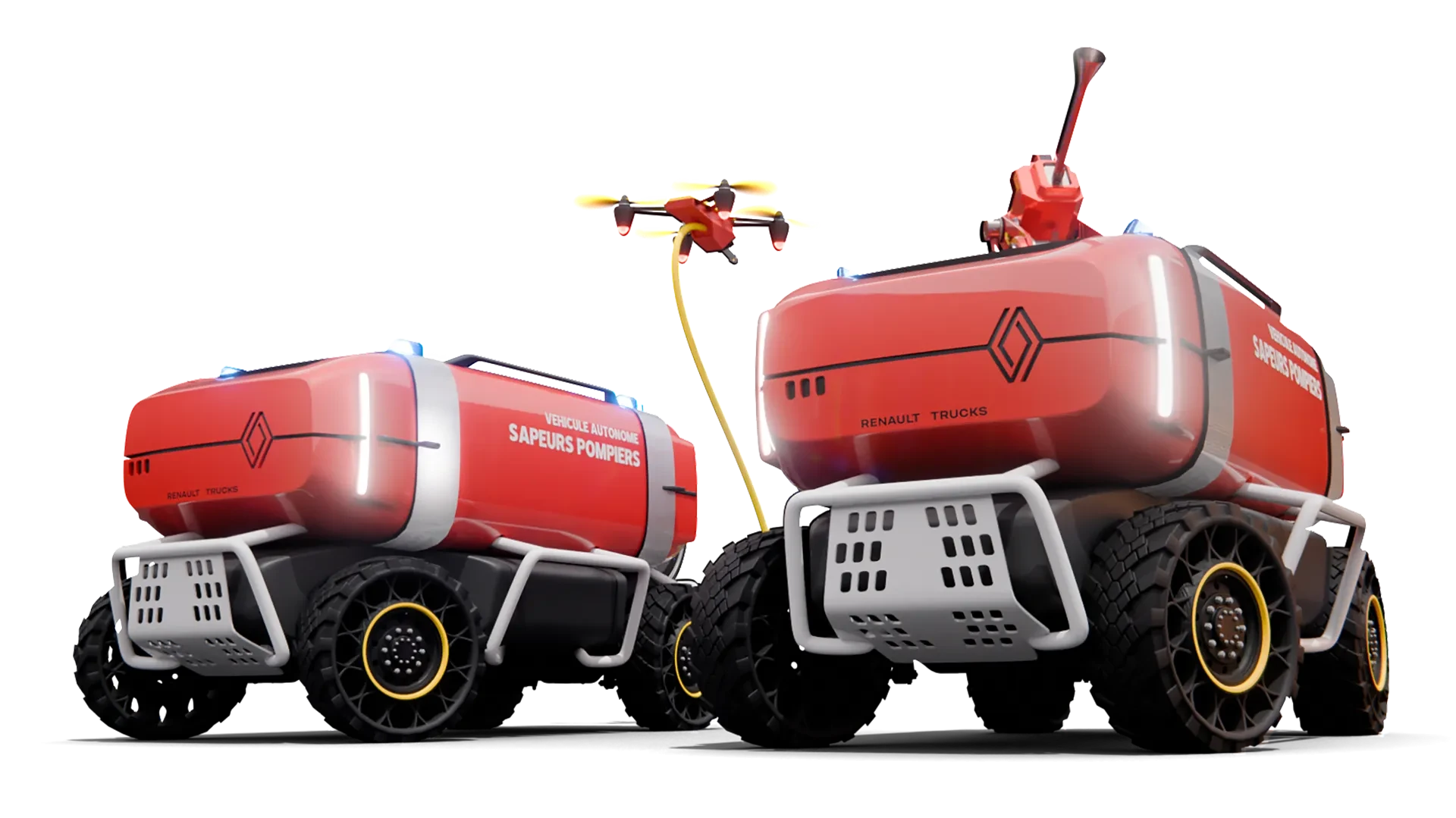
At the French National Firefighters' Congress, Renault Trucks is presenting its Vision of tomorrow's emergency and firefighting vehicles. In response to the changing nature of wildfire risks, Renault Trucks’ Halle du Design (HDD) has created a Vision combining a command vehicle, drones and autonomous modules to make operations safer and more effective.
For more than a century, Renault Trucks has been designing vehicles for emergency and firefighting professionals. Today, we explore Renault Trucks’ latest Vision as climate change intensifies and wildfire risks spread to new regions.
As fires become larger, faster-moving and harder to reach, firefighting resources must evolve. Under the direction of Paul Daintree, Renault Trucks’ Halle du Design has imagined a coordinated ecosystem in which each vehicle or module performs a specific function. It has two objectives: to improve situational awareness and concentrate resources on the areas where the fire is most intense without unnecessarily exposing firefighters to danger.
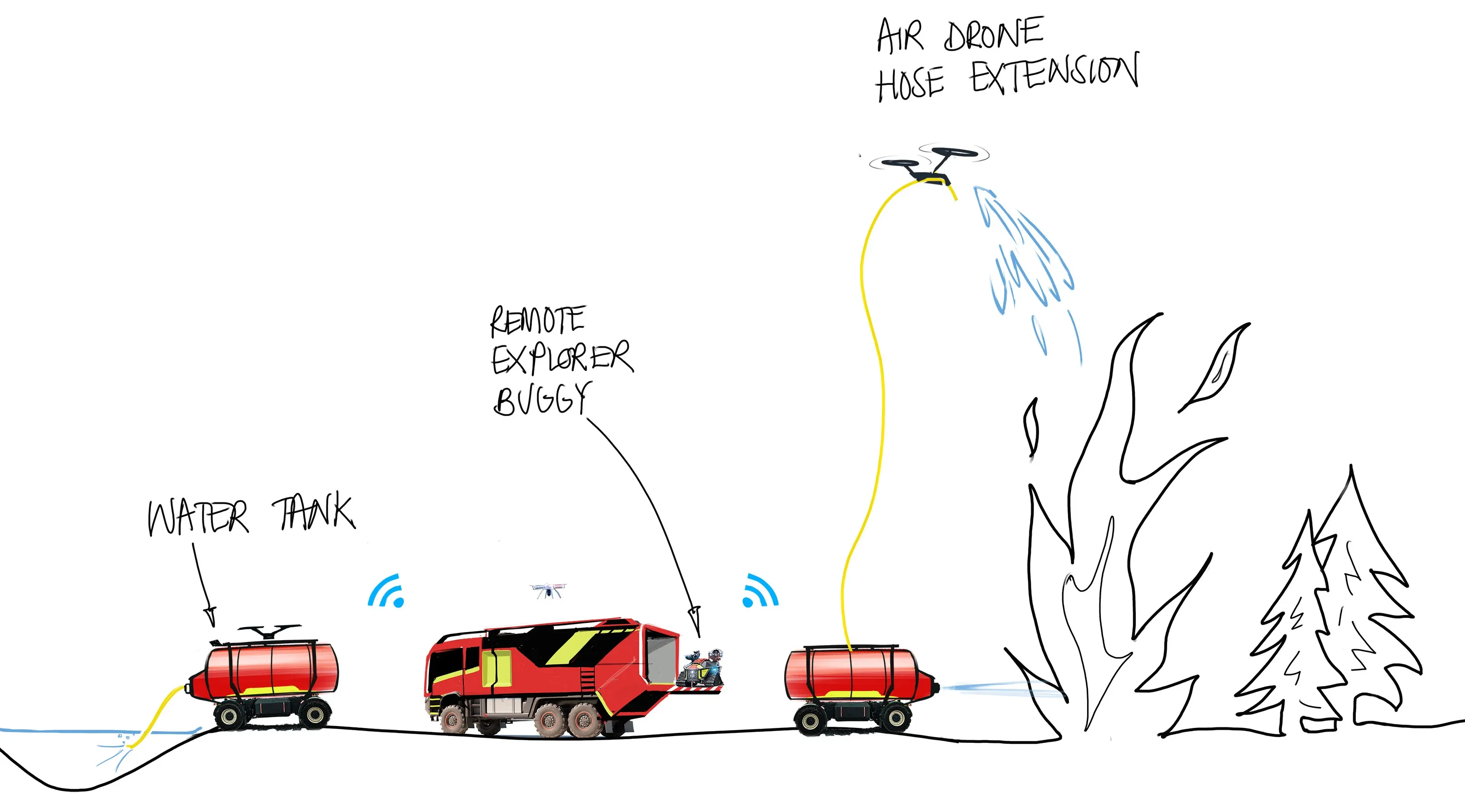
A command vehicle positioned at a safe distance
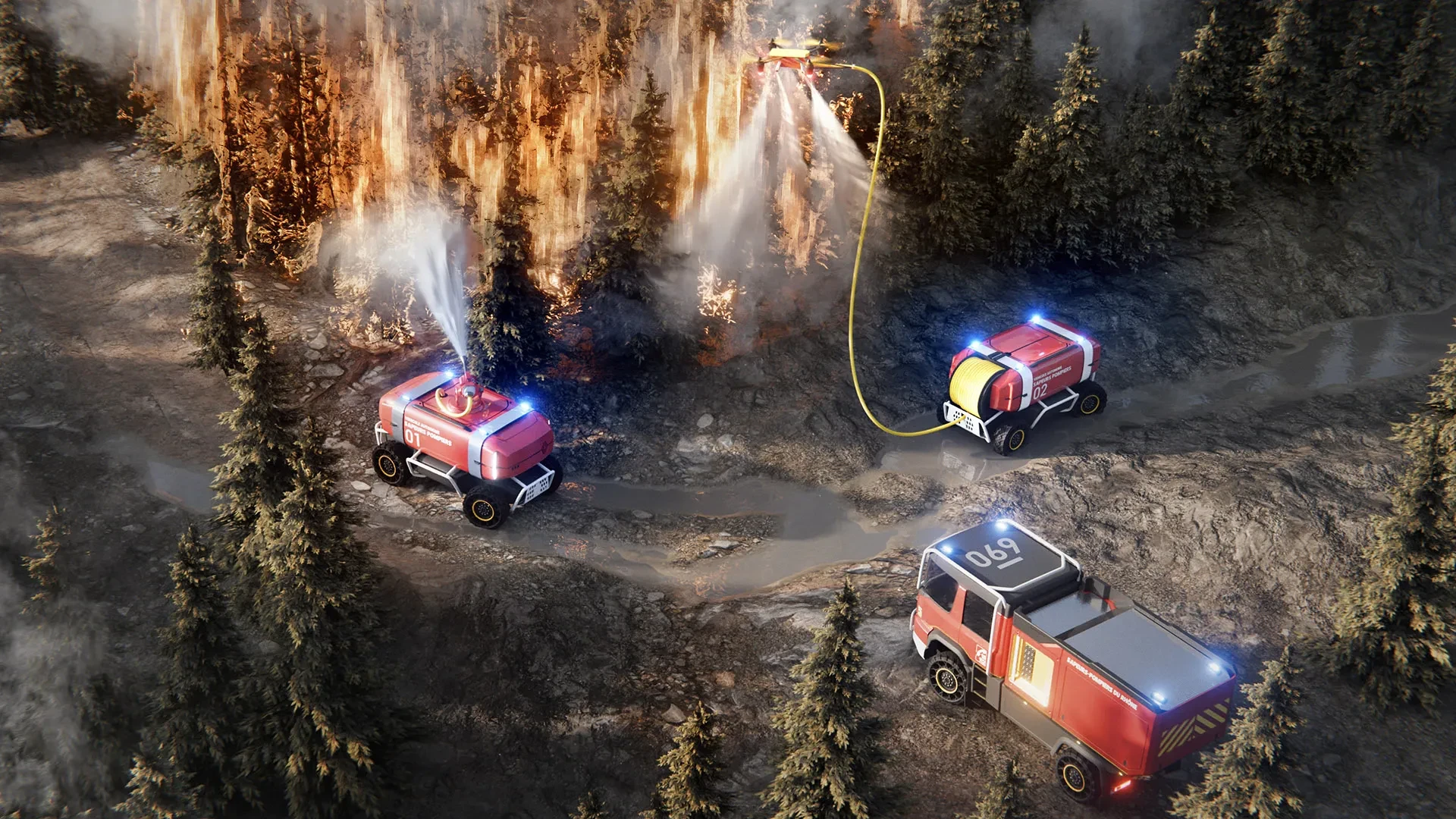
A vehicle built on a Renault Trucks platform is the operational heart and command centre of the system. Positioned away from the fire front, it enables an operator to coordinate the deployment of drones and ground modules.
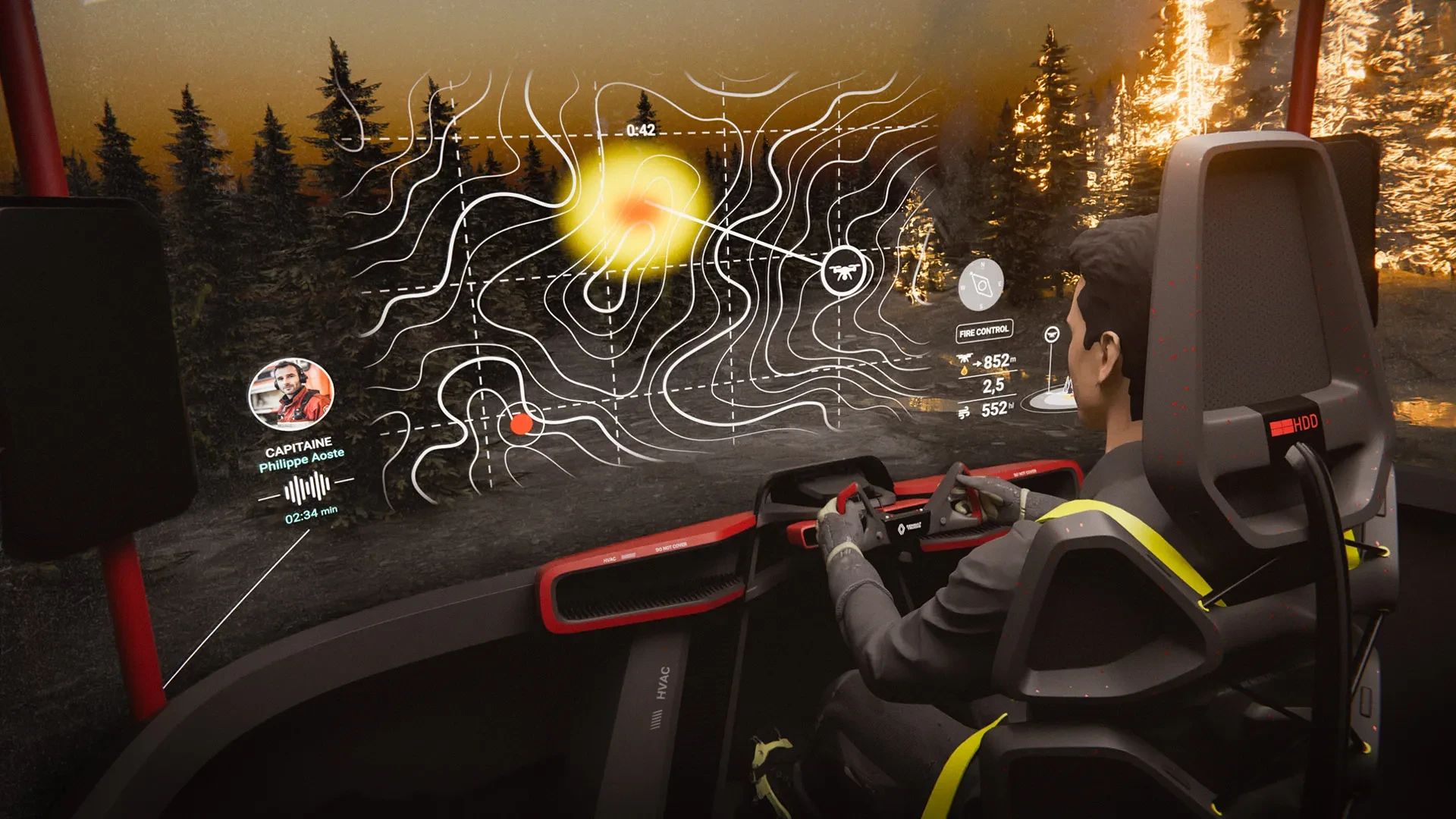
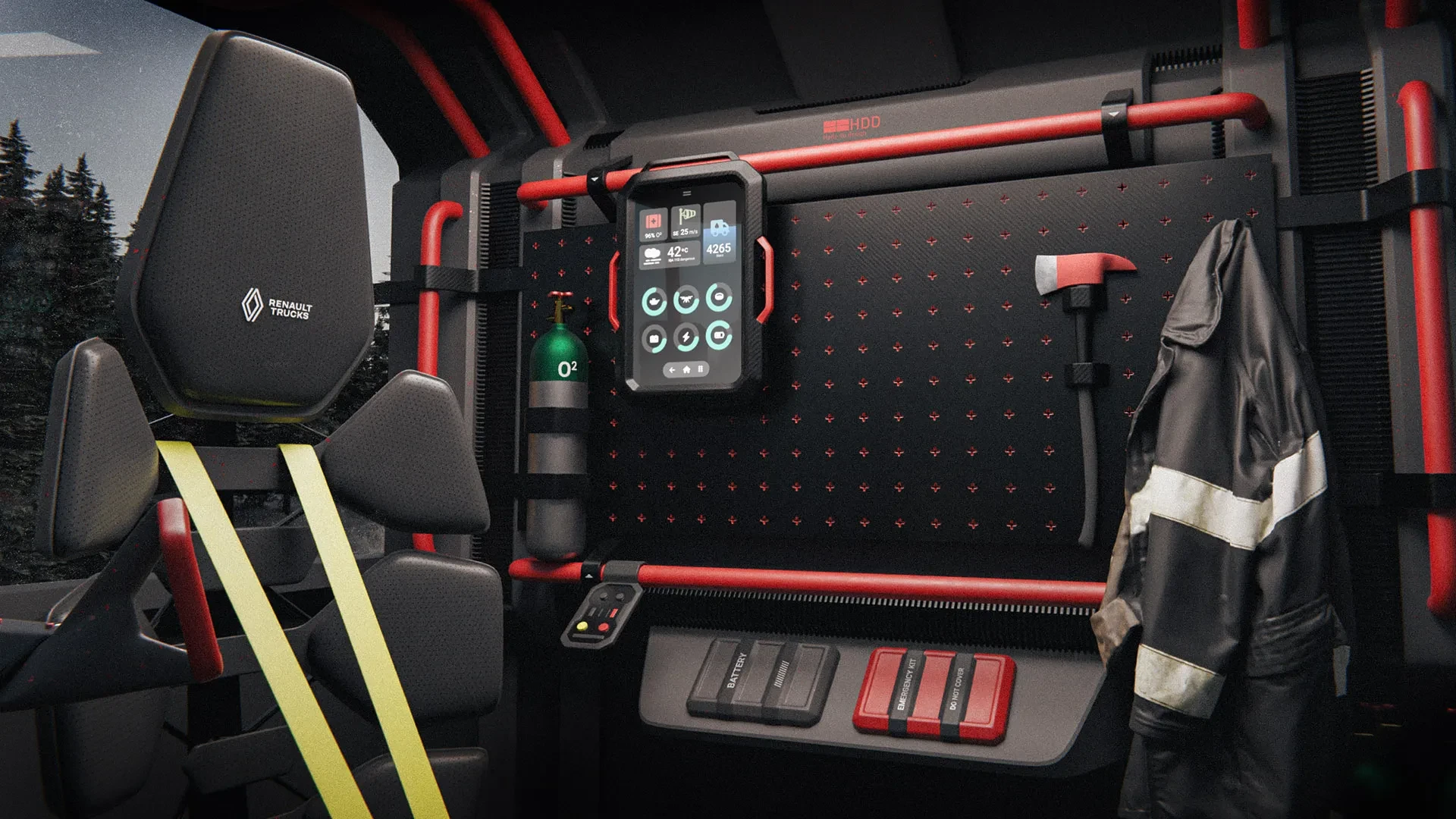
Inside the cab, high-definition digital displays recreate the environment in three dimensions using camera images and data collected by the various sensors. The driver therefore retains an accurate view of the terrain, even when smoke severely restricts visibility.
With full connectivity, these views and data can be exchanged and mirrored. The fully connected command vehicle can work independently or as part of coordinated swarms with other units and remote command centres, maximising efficiency and minimising risks.
.
Drones and autonomous modules operating close to the fire
In addition to extinguishing the fire, the drones provide the command centre with aerial images as well as data on the fire's progression and the weather conditions. They can help locate hot spots, guide the response and monitor the area once the fire has been brought under control, so that any flare-up can be detected quickly.
On the ground, autonomous or remotely operated support modules carry water and equipment into areas where the intensity of the fire, smoke or unstable terrain makes human intervention impossible. The operator continues to supervise operations from the command centre and can take control remotely if necessary. Vehicle-to-vehicle and vehicle-to-infrastructure communications are enabled by secure satellite links.
> What role do Visions play in Renault Trucks' approach to innovation?
Visions are a way to project ourselves into the future ecosystem. Based on continuous PESTEL analysis - covering - Political, Economic, Social, Technological, Environmental and Legal studies – relevant scenarios can be created. Renault Trucks products and services need to fit seamlessly into a future with connectivity, electromobility and AI. This is precisely the purpose of our “True Makers, True Partners” strategy.
Our most recent Vision was the award-winning U-Connect urban for last-mile logistics. It could enable 6.5 times more goods to be carried at the same cost, while halving urban congestion. This Vision also enabled us to identify the perfect partners, including, Renault SA, Kleuster, Flexis, and to develop supporting services such as Renault Trucks City, located at the heart of Lyon’s Urban Logistics Hotel.
> What prompted you to explore what tomorrow’s emergency and firefighting vehicles might look like?
CO2. In 2022, forest fires in France emitted ten times more CO2 than the average of the previous 20 years. This is huge!
Renault Trucks has genuine expertise in this field. For more than a century, we have supported emergency and firefighting professionals across several continents.
The accelerating risk also means that we need to look further ahead. The affected areas are growing, fires are spreading to new regions and some operations are becoming too dangerous for crews.
Our starting point was simple: how can future technologies and ecosystems provide firefighters with better protection while enabling fires to be extinguished much more quickly and with lower CO₂ emissions?
> You have imagined a system in which an operational vehicle remains at a safe distance while coordinating several intelligent autonomous modules and drones. What benefits could this system deliver?
The first benefit is safety. Operated remotely, the drones and autonomous ground support modules can enter areas where a human presence would be too dangerous. The operator would remain in the command vehicle, at a safe distance from the fire.
The second is effectiveness. The drones and autonomous ground support modules can penetrate deeper into the fire while the operator has a consolidated view of the situation and can concentrate resources where the fire is most intense. As fewer operators are needed per unit, more units can therefore be coordinated, using a swarm-based methodology.
> Is the command vehicle itself designed to protect the operator?
Exactly. By remaining inside the operational vehicle, the firefighter benefits from a range of systems designed to maintain clean air and moderate temperatures in the cab. The crew compartment is therefore designed to prevent smoke and toxic or harmful substances from entering.
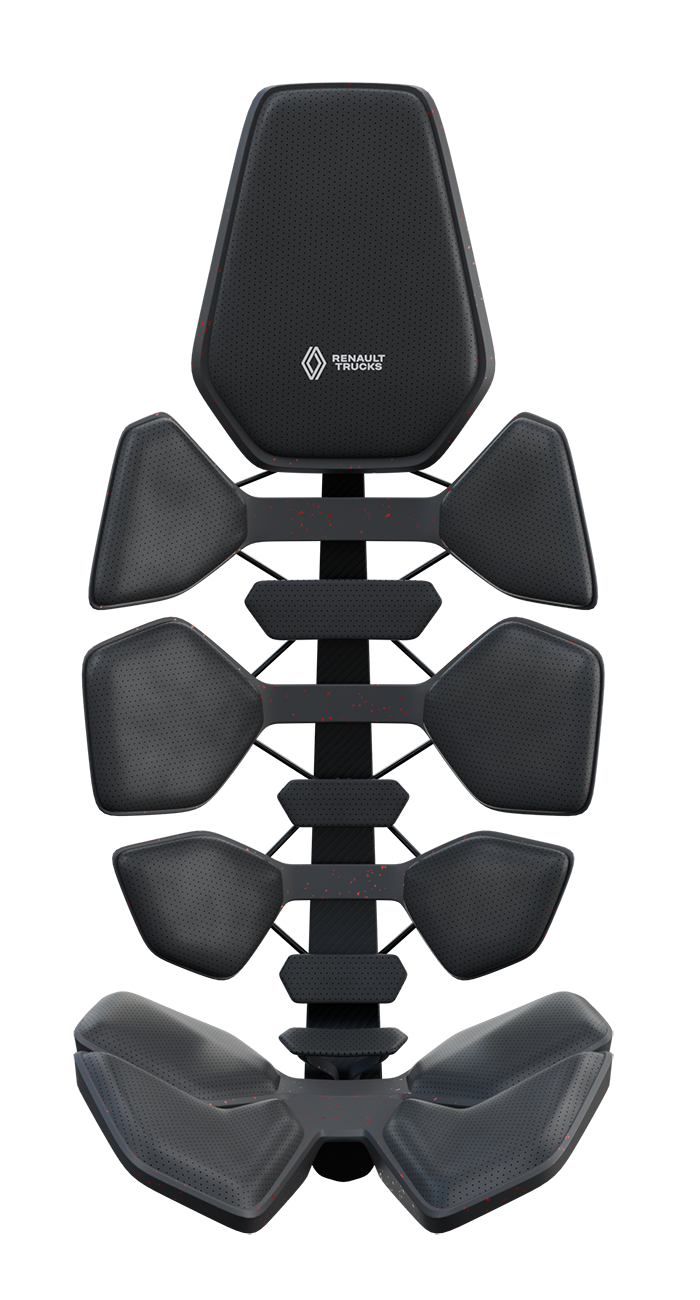
The seat is designed to limit the areas of contact with the occupant's back, improving ventilation and absorbing shocks.
Smoke is not the only obstacle that needs to be overcome. The operational vehicle does not have to venture onto unstable or steep terrain. That is the role of the autonomous modules.
> A 3D display and autonomous modules: are they science fiction?
No. The technological building blocks already exist: autonomous platforms, remote operation, sensors, three-dimensional visualisation and satellite communications. The main challenge is to integrate them into a coherent system suited to operational conditions.
The regulations will also need to evolve. As these vehicles would operate within areas closed to the public, trials could take place sooner than for autonomous vehicles travelling freely on public roads.
.
> When could these solutions become a reality?
An initial vehicle demonstration could be considered before the end of the decade. The autonomous modules could reach operational maturity shortly after 2030, provided that testing outcomes and regulatory developments allow.
The most futuristic version of the interior, featuring a simulator and a transparent OLED display, is more likely to emerge around 2040. These dates indicate a direction; they do not represent an industrial timetable.
> How do you plan to involve emergency professionals in the next stages of the project?
“True Makers. True Partners.” Partnerships are essential. Their involvement is a prerequisite for the success of a project such as this. Since 2022, Renault Trucks’ Halle du Design has been at the forefront of virtual reality (VR) development within the Volvo Group. This Vision and its ecosystem can already be experienced through our virtual reality headsets, providing an ideal platform for our partners and key stakeholders to explore and understand the concept.
We need to present the concept to firefighters, listen to their feedback and test every decision against operational realities. We will also need to work with equipment manufacturers, drone and sensor specialists, connectivity providers, researchers and public authorities.
Renault Trucks can put forward a Vision and a platform, but an ecosystem of this kind can only become operational with the involvement of all these partners.
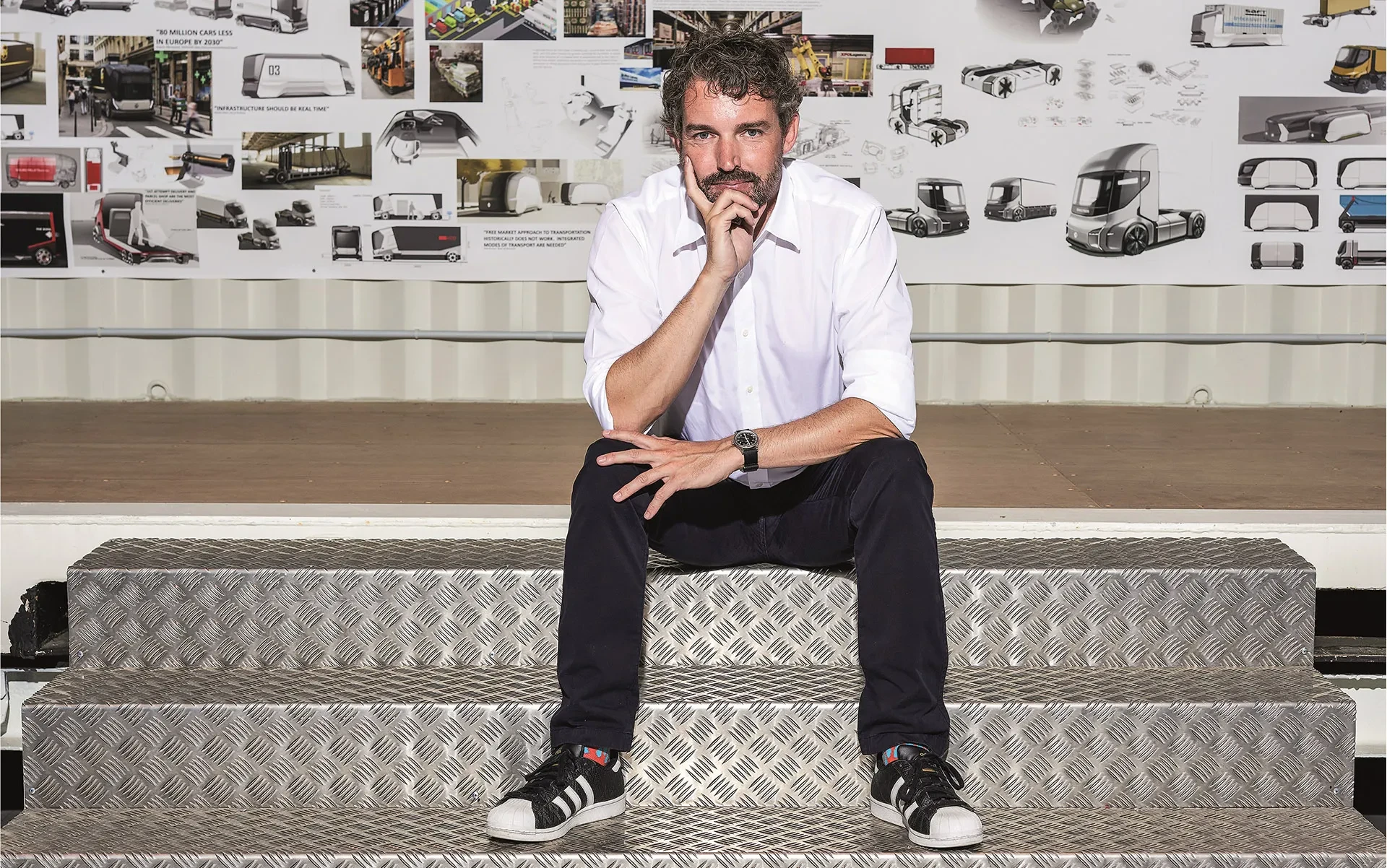
Paul Daintree is Design Director at Renault Trucks. Together with his team, he imagines and anticipates what tomorrow's electric trucks will look like. He has extensive experience in industrial design, mainly applied to trucks and other vehicles.
From 2002 to 2004, he worked as a designer at Volvo Trucks North America before moving to Volvo Trucks, again as a designer. In 2006, he joined Kenworth Truck Co. before moving to Renault Trucks. At the French manufacturer, he successively held the positions of Lead Interior Designer, Senior Designer and Chief Designer.
Throughout his career, he has contributed to numerous design projects, including the development of concept vehicles and the organisation of customer clinics.
Paul Daintree holds a Bachelor of Arts in Product Design from the University of Leeds.