Press release - 27 January 2026
Use case: Renault Trucks and Hugelshofer demonstrate the potential of electric trucks under intensive operating conditions
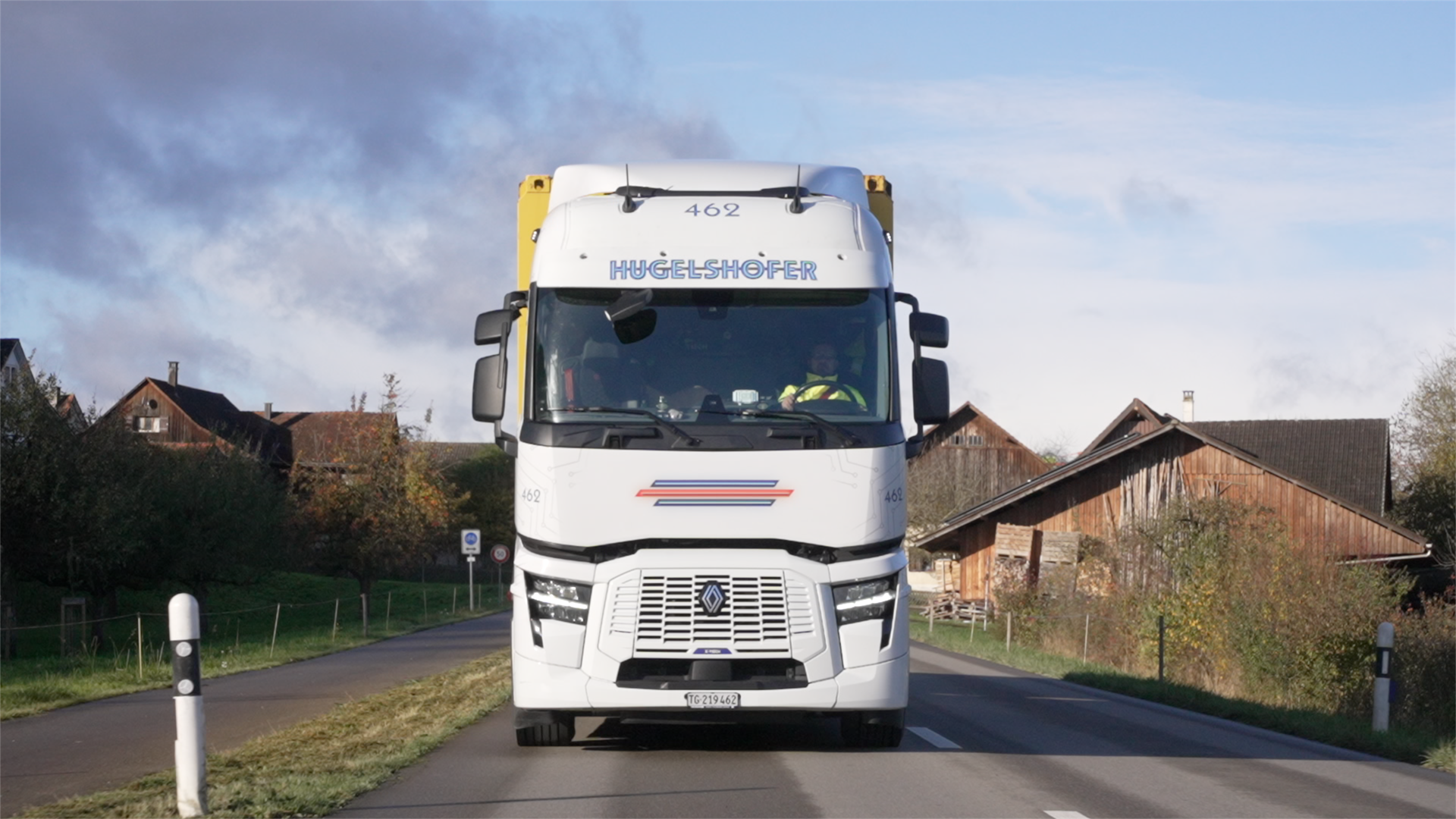
Over 1,000 km driven in one day using a Renault Trucks E-Tech T with a nominal range of 300 km. The example of Swiss haulier Hugelshofer Logistik shows that electric truck performance relies on an overall operational strategy rather than battery capacity alone.
“The key question is not the truck’s maximum range but how it is integrated into transport operations. By adjusting our routes and charging strategy, we’re able to maximise the daily operating time of our electric trucks so they become true industrial assets, perfectly adapted to our activities,” explains Martin Lörtscher, CEO of Hugelshofer Logistik AG.
-
A logistics set-up designed to maximise electric truck use
Hugelshofer operates a fleet of 220 trucks, including 80 electric vehicles. A total of 150 drivers at the company use electric HGVs on a daily basis.
To maximise the operating time of its electric trucks and therefore optimise total cost of ownership (TCO), Swiss haulier Hugelshofer Logistik runs its Renault Trucks E-Tech T vehicles with double crews. Drivers carry out intermediate charging during their mandatory rest breaks, with a full recharge conducted overnight at the depot. Thanks to this approach, each electric truck can travel over 600 km on a typical operating day, despite a nominal range of 300 km.
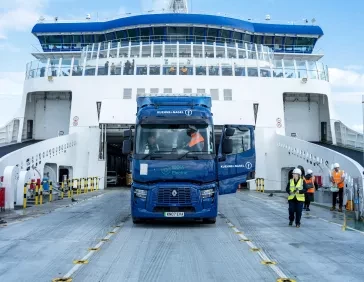
On a record day, one of the Renault Trucks E-Tech T vehicles in the Swiss operator’s fleet even covered 1,007 km in 24 hours. This performance demonstrates that intensive use is entirely feasible when the mission, operating area and charging strategy are clearly defined. It also highlights the importance of correctly sizing battery capacity – depending on usage, opting for the maximum available capacity is not always required, as it can be tailored to maintain payload and efficiency. This is why Renault Trucks works closely with its customers to define the most suitable configuration, according to their constraints and real operational needs.
-
Charging infrastructure that drives performance
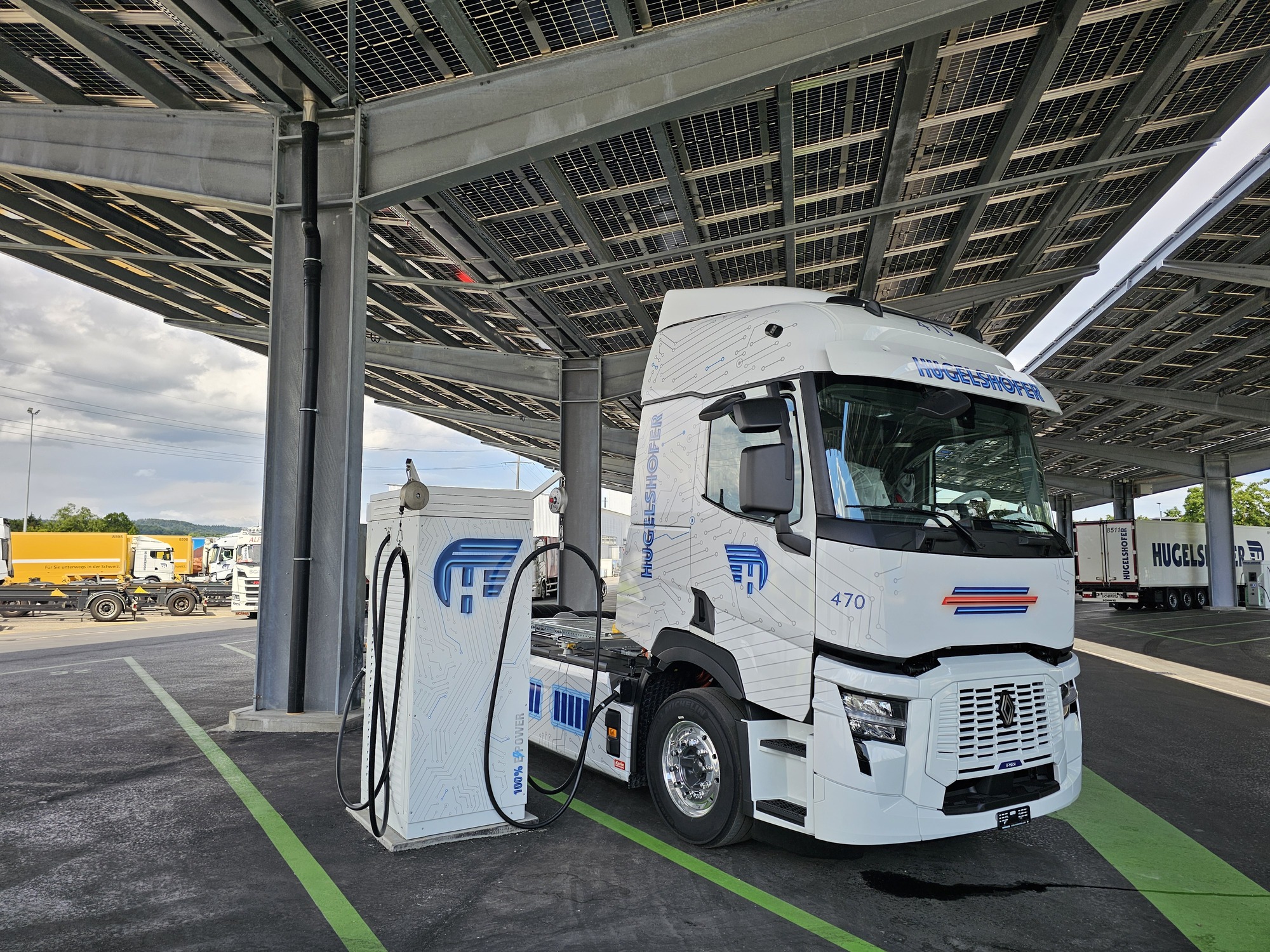
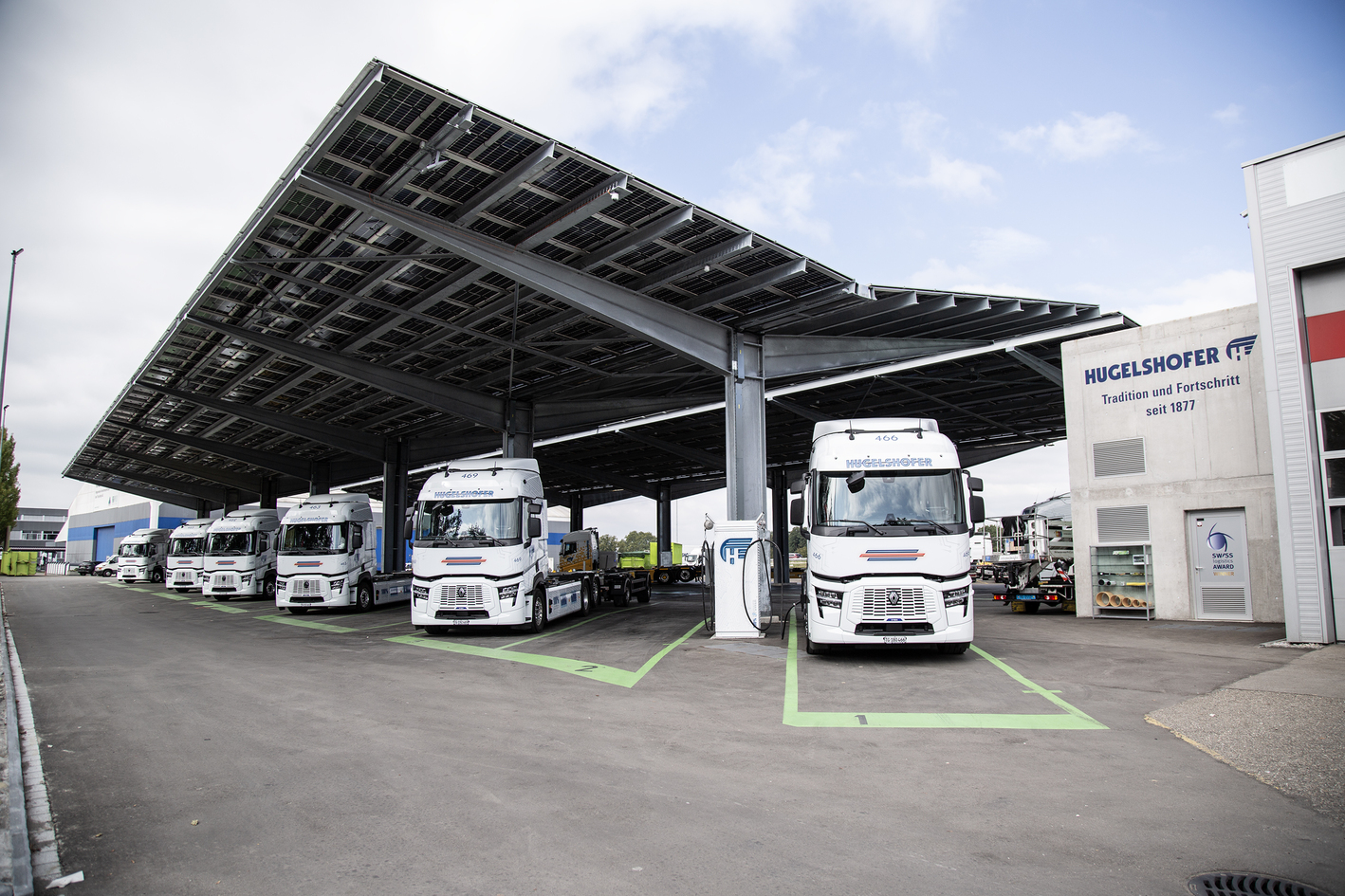
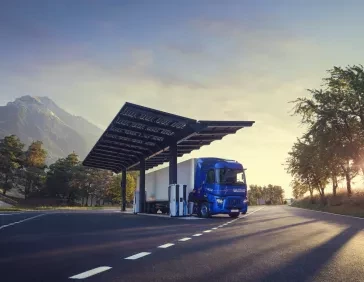
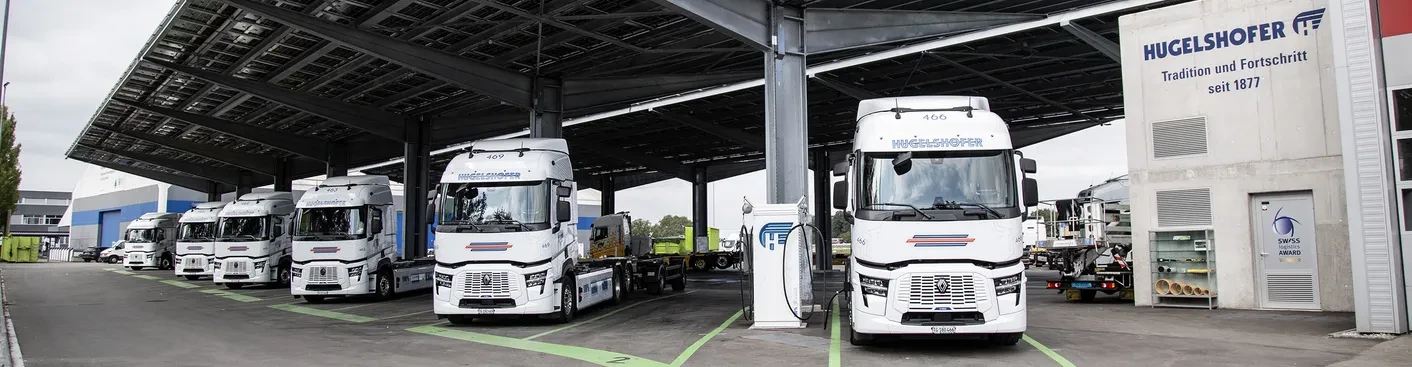
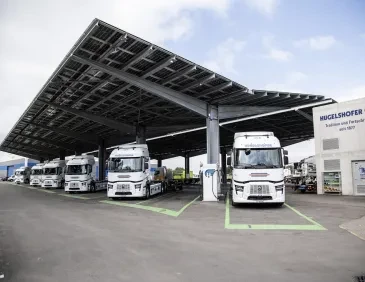
The performance of Hugelshofer’s Renault Trucks E-Tech T vehicles relies in particular on an optimised charging infrastructure. At its Frauenfeld site, the haulier has installed 30 fast-charging stations with a maximum output of 480 kW, capable of charging up to 100 trucks per day.
This set-up is supported by a photovoltaic system that produces 1.2 million kWh annually, while three transformers ensure the stability of the grid. As a result, 95% of charging now takes place directly at the depot, ensuring cost control, operational reliability and seamless day-to-day operations.
-
Switzerland, a supportive ecosystem for heavy truck electrification
Hugelshofer Logistik achieves operating costs for its electric trucks that are approximately 30% lower than comparable diesel vehicles. While this performance stems from the haulier’s strategic and operational choices, it is also supported by a Swiss regulatory framework that is favourable to the electrification of heavy goods vehicles.
In Switzerland, zero-emission trucks benefit from significant advantages under the LSVA road charge, making electric vehicles economically competitive with conventional powertrains. At the same time, the Confederation has announced an investment programme of 20 million Swiss francs from 2026 to 2030 for the rollout of charging infrastructure for heavy trucks.
The Swiss model is particularly conducive to heavy truck electrification – over the first eleven months of 2025, Switzerland recorded an electrification rate of 14.7% for vehicles over 16 tonnes, nearly eight times higher than the European average of 1.9%.
For Renault Trucks, electric mobility represents the primary lever to meet decarbonisation objectives in road freight transport. The Swiss example demonstrates that the shift to electric trucks can accelerate when vehicles, infrastructure, organisation and public policy move forward in unison. It is therefore vital for European countries to take inspiration from this model to establish the conditions needed for large-scale electrification.
Press contact
Phone : +33 4 81 93 09 52
E-mail : severyne.molard@renault-trucks.com
Hugelshofer Logistik - Renault Trucks E-Tech T