Press release - 7 October 2026
Blainville-sur-Orne plant: 70 years supporting road transport
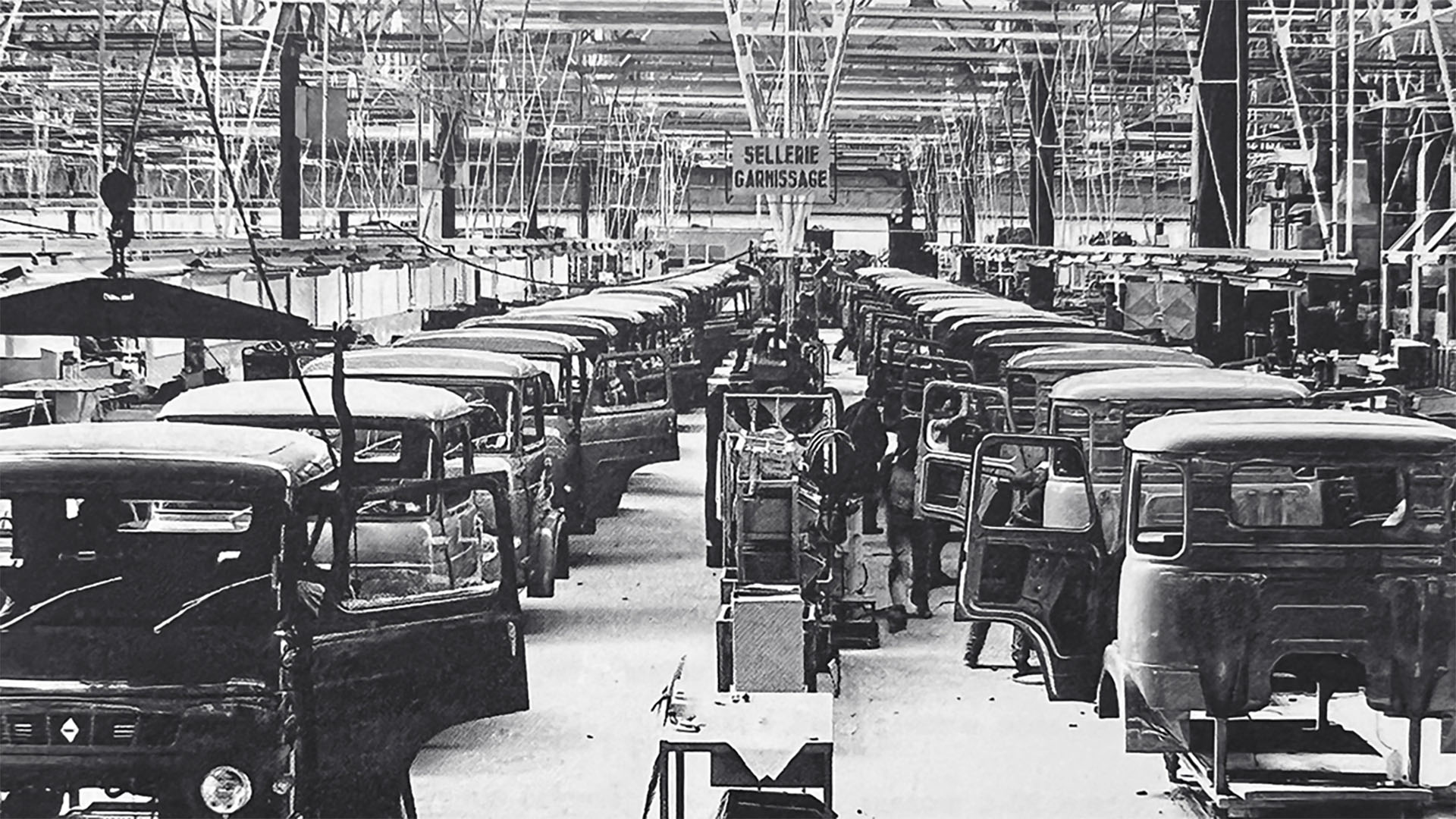
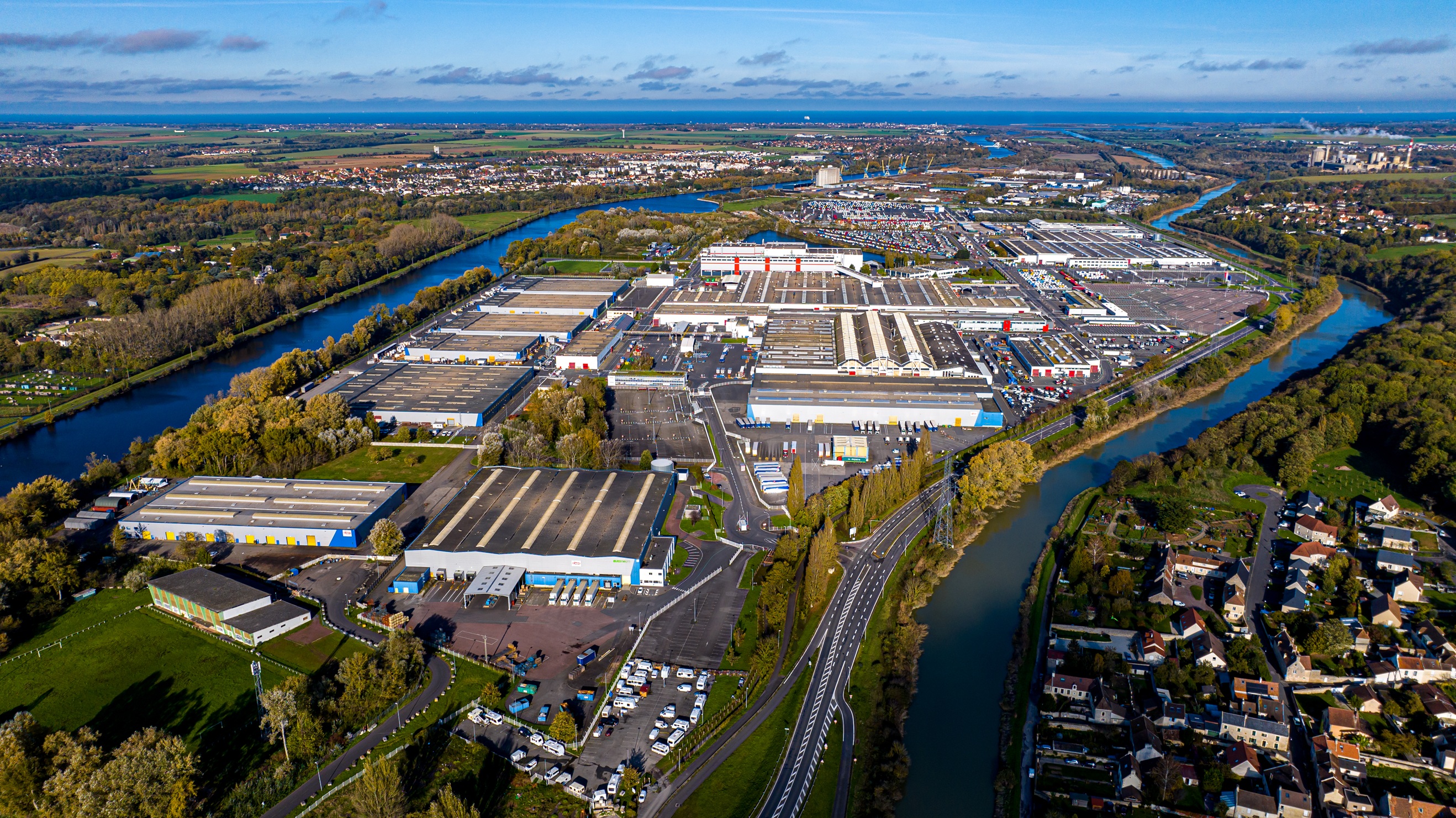
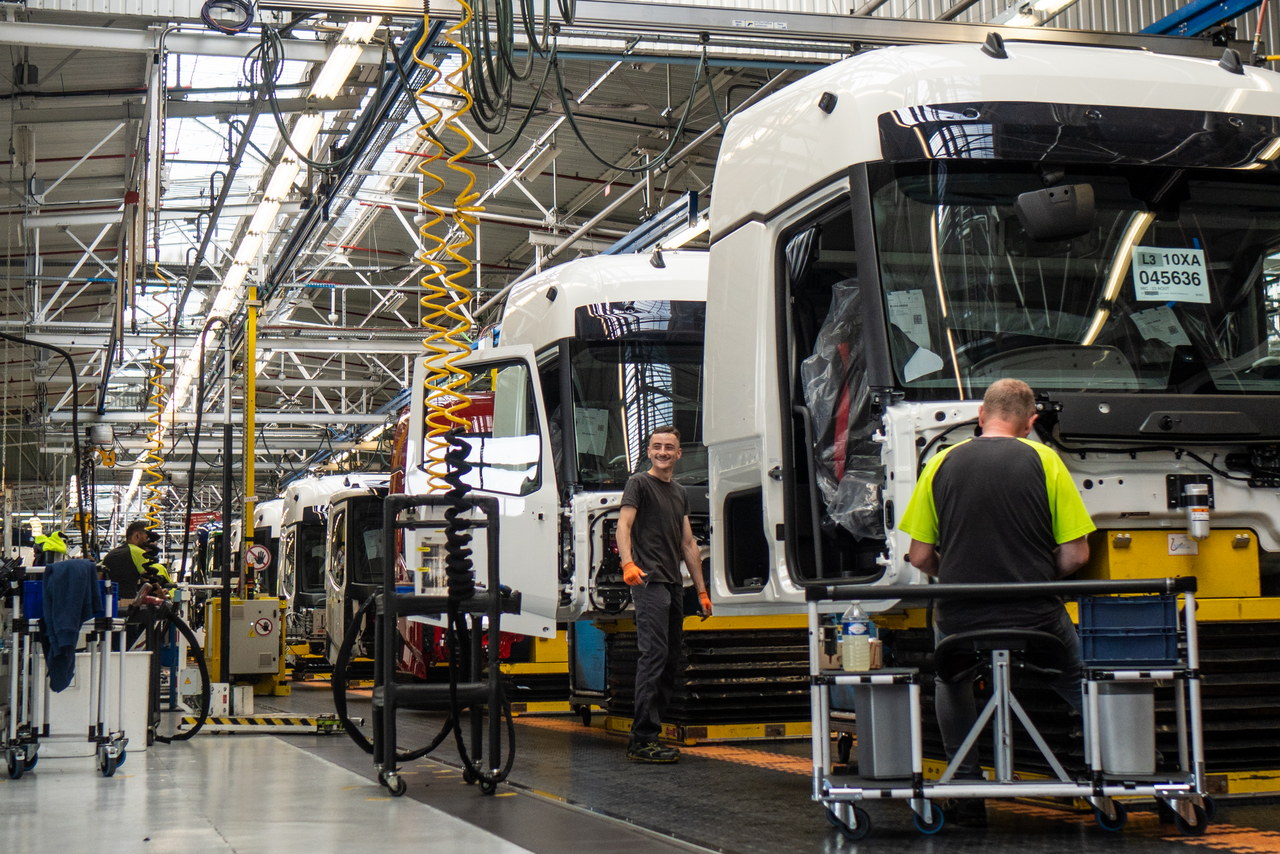
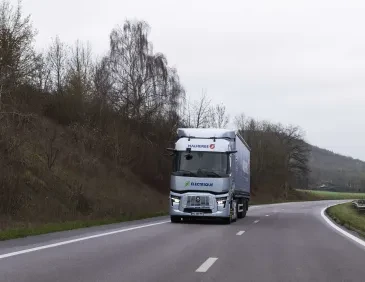
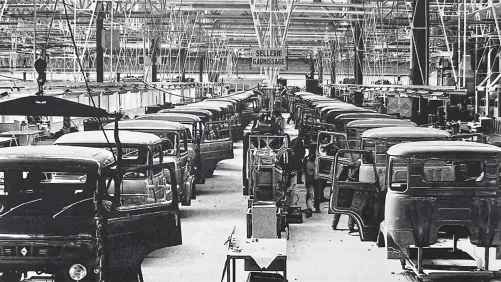
Since 1956, the Renault Trucks manufacturing plant in Blainville-sur-Orne, Calvados, has evolved alongside the major changes shaping the road transport industry. Today, it manufactures cabs for the entire Renault Trucks range and assembles medium-duty vehicles, both electric and diesel, as well as adapting them to meet customers’ specific requirements.
Over the past 70 years, the Blainville-sur-Orne plant has undergone major changes to keep pace with the evolving needs of road transport. From manufacturing conventional industrial vehicles to producing electric trucks, it has continually expanded its capabilities and developed its expertise. The site currently employs 2,400 people, making it a major contributor to the Normandy economy.
From shipbuilding to truck manufacturing
The site’s story dates back to 1917, when the Chantiers Navals Français shipyard began operations. For almost 40 years, cargo ships and naval vessels were built there, until the shipyard closed in 1954.
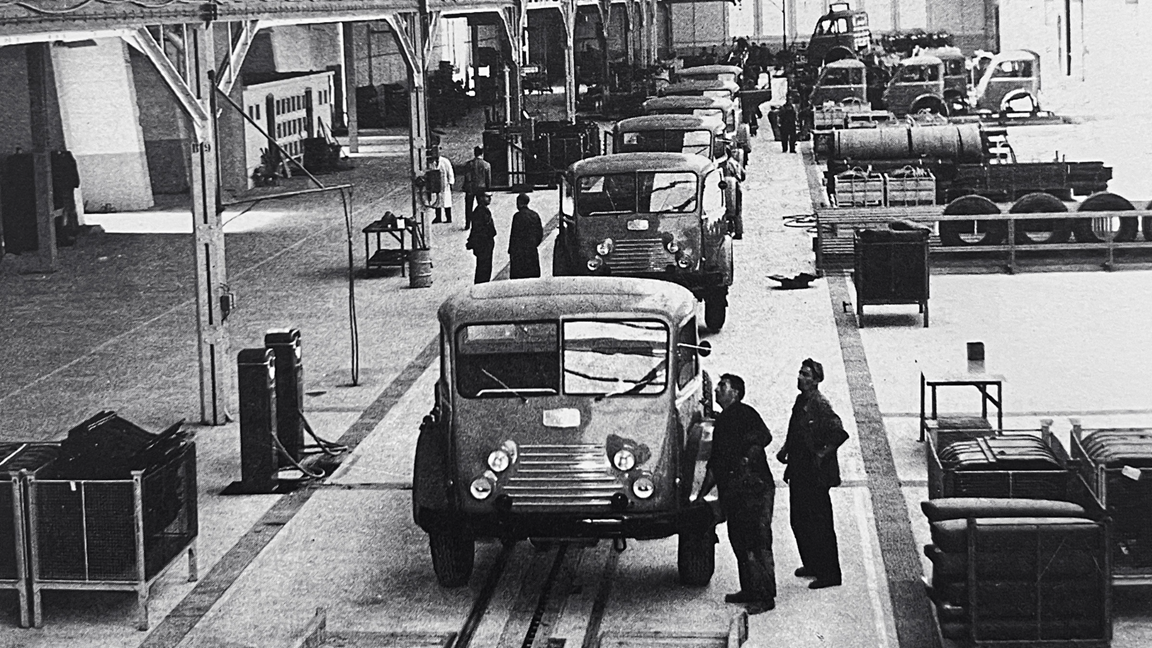
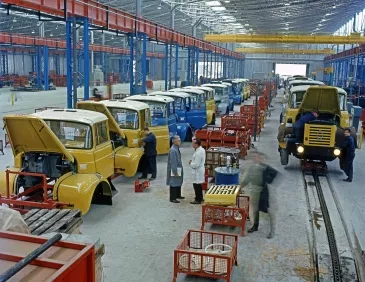
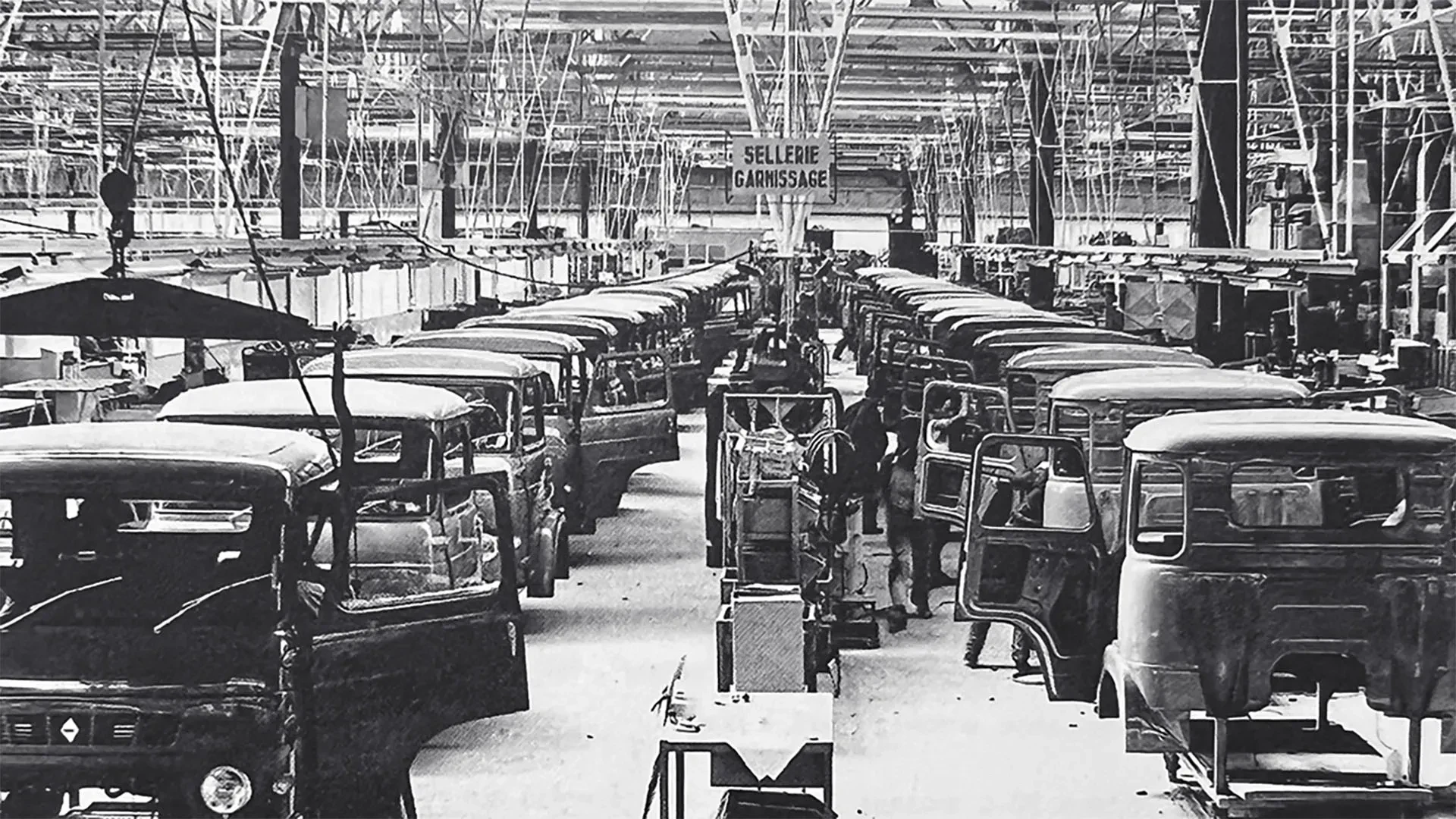
In 1956, Saviem, a Renault subsidiary, established a plant on the site to manufacture industrial vehicles. Production soon gathered pace, fuelled by the rapid expansion of road freight transport.
Following its integration into Renault Véhicules Industriels in 1978 and then the Volvo Group in 2001, the plant progressively focused on producing Renault Trucks cabs and assembling medium-duty vehicles.
Leading the shift to electric mobility
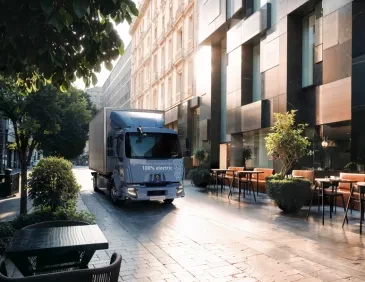
In 2020, Blainville-sur-Orne became the first plant in Europe to begin series production of electric trucks, marking a major milestone in the transformation of the industry. Since then, more than 3,000 Renault Trucks E-Tech D electric trucks (12, 14 and 16 tonnes) and Renault Trucks E-Tech D Wide models (19 and 26 tonnes) have rolled off the production line.
Industrial expertise built around real-world applications
The trucks assembled at Blainville-sur-Orne, whether electric or diesel, serve a broad range of purposes, including urban distribution, waste collection, emergency and fire services, and construction site approach. To meet the specific requirements of each application, Renault Trucks opened a customer adaptation centre within the plant in 2021.
The 2,500 m² facility enables specialist teams to customise vehicles to order, from installing specific equipment to carrying out more substantial modifications. This means each Renault Trucks D or D Wide can be tailored at the factory to the operational demands of the customer.
70 years of truck production at Blainville-sur-Orne
Le The Tancarville was the first model produced at the site, with 5,356 vehicles built between 1957 and 1964.
From 1959, the site also produced the heavy-duty SAVIEM JL range. Over 26,700 JL 20 and JL 29 models built by 1970.
Production of the medium-duty SAVIEM SM range began in 1963. Around 45,000 vehicles left the Blainville-sur-Orne plant, initially badged the S5, S6, S7 and S8, then, from 1967, as the SM5, SM6, SM7 and SM8. Production ran until 1982.
From 1965, the plant also manufactured the SAVIEM SG light commercial vehicle range. A total of 292,500 petrol and diesel SG2, SG3, SG4 and SG5 models were built through to 1988. The range was further extended in 1967 with the front-wheel-drive SB2 van. Production totalled 16,767 vehicles between 1967 and 1980.
Also in 1967, the plant began producing the heavy-duty SAVIEM H and P ranges, with 47,800 vehicles manufactured by 1981.
Military vehicle production was added in 1969 with the SAVIEM TP2-TP3, with almost 11,000 units built by 1988.
The SAVIEM J and S ranges followed in 1975 and continued to be built at Blainville-sur-Orne into the early 1990s. They were then succeeded by the Renault Midliner (also known as the Renault M/MK), which remained in production until the Renault Midlum was launched in 1999.
Between 1978 and 1992, Blainville-sur-Orne produced the highly diverse G range. Its distribution variants later evolved into the Renault Manager (1992–1997) and then the Renault Premium Distribution (1997–2014).
Military production continued with the Renault TRM 4,000 (1982–1989) and Renault TRM 2,000 (1982–1992). The Renault TRM 10,000 was built from 1985 to 1998, followed by the Renault VTL (logistics transport vehicles) from 1988 to 1993 and the Renault TRM 700-100 from 1993 to 1998.
In 2013, the introduction of the Euro VI emissions standard prompted Renault Trucks to renew its entire range – an industry first. The Renault Trucks D, D Wide and Cab 2.3 were added to the manufacturer’s offering.
The plant’s pioneering role continued in 2020, when it became the first in Europe to start series production of the electric Renault Trucks E-Tech D and E-Tech D Wide.
Press contact
Phone : +33 6 65 86 45 52
E-mail : severyne.molard@renault-trucks.com
70 years of Renault trucks Blainville-sur-Orne assembly plant